What is TMS therapy? TMS therapy, or transcranial magnetic stimulation, is a non-invasive, FDA-cleared treatment that delivers targeted magnetic pulses to the areas of the brain that regulate mood. It was first approved for treatment-resistant depression in 2008, and it now helps patients who have not found lasting relief from medication or talk therapy alone.
What We Know
- TMS received FDA clearance for treatment-resistant depression in 2008, with additional clearances added for other conditions since.
- About half to two-thirds of patients see a meaningful reduction in symptoms after completing a full course of treatment.
- Sessions are non-invasive and require no anesthesia, so most patients return to work or daily activities right after each appointment.
How Does TMS Therapy Work?
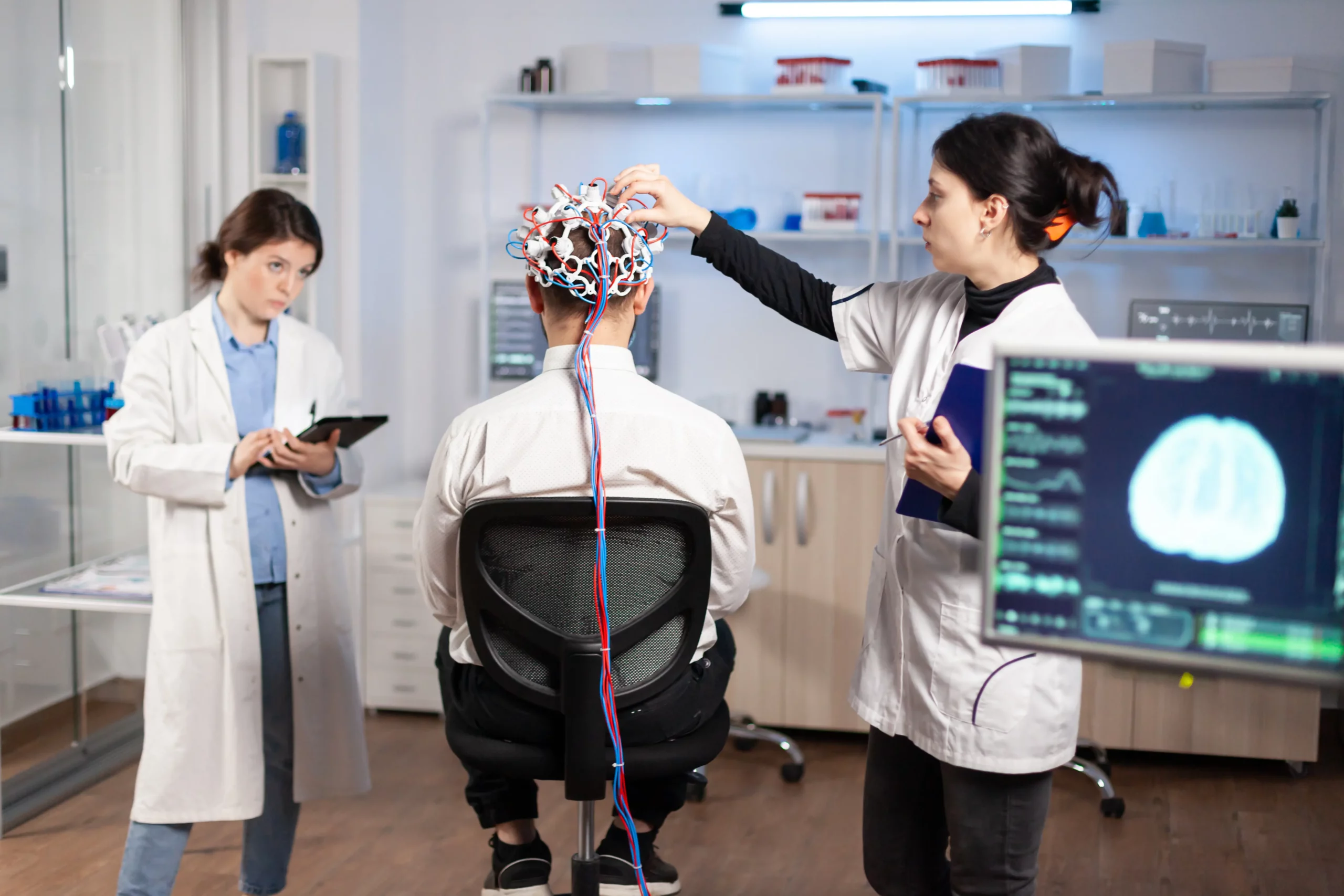
TMS works by placing an electromagnetic coil against the scalp, close to the forehead. The coil delivers short magnetic pulses that pass painlessly through the skull and generate small electrical currents in the underlying brain tissue, primarily targeting the dorsolateral prefrontal cortex, a region involved in mood regulation.
Repeating this process over multiple sessions is thought to strengthen the connections between this region and deeper areas of the brain involved in emotional regulation. Unlike electroconvulsive therapy, this treatment does not require sedation and does not intentionally trigger a seizure. Most patients describe the sensation as a light tapping or knocking on the scalp, and it fades quickly as the body adjusts to the rhythm of the pulses.
The National Institute of Mental Health classifies TMS as one of several brain stimulation therapies used to treat mental health conditions that have not responded sufficiently to medication or psychotherapy alone.
What Conditions Does TMS Therapy Treat?
TMS therapy is FDA-cleared to treat major depressive disorder, including cases that have not improved with medication, and this remains its most established use. Additional FDA clearances now cover obsessive-compulsive disorder and smoking cessation, and the treatment is sometimes used off-label for other conditions under a psychiatrist’s guidance.
Coverage and eligibility for each indication vary by insurer and by individual diagnosis, so confirming your specific situation with a prescribing psychiatrist is an important first step.
What Happens During a Session?
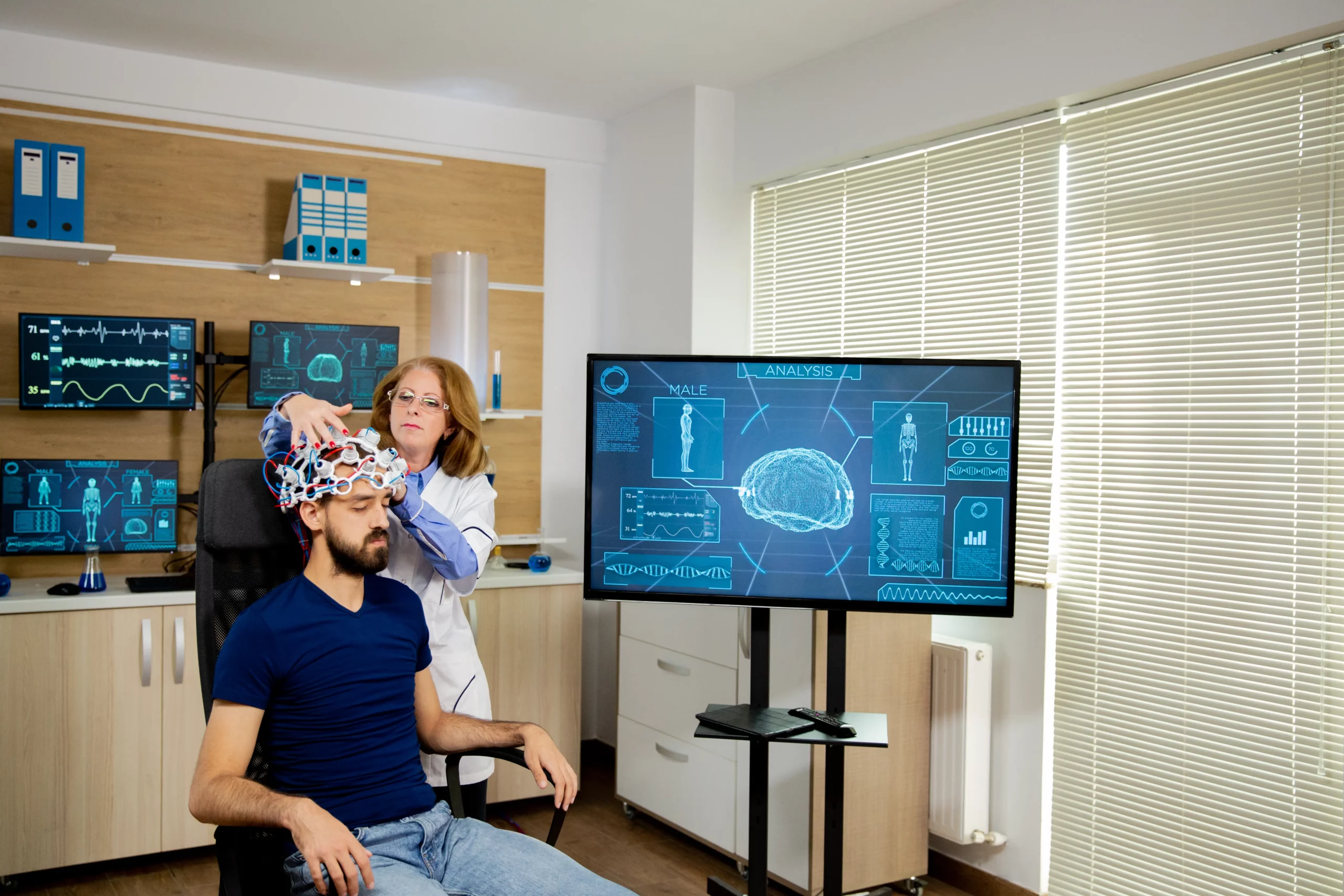
A typical session begins with the technician positioning the coil against a mapped location on your scalp, based on measurements taken during your first visit. You sit in a chair, fully awake, while the machine delivers a series of pulses in a set pattern for roughly 20 to 40 minutes, depending on the specific protocol your psychiatrist prescribes.
A standard course typically runs five days a week for four to six weeks, for a total of around 30 sessions, though accelerated protocols can compress this timeline into fewer days. There is no recovery time needed. Patients can drive themselves to and from appointments and return directly to work or other plans afterward.
How Effective Is TMS Therapy?
TMS has a strong track record for patients who have not responded to standard treatments. In an overview of standard protocols, Yale Medicine reports that about 60 percent of patients who did not improve with other depression treatments respond to this treatment, and more than half of those patients remain in remission six months after finishing.
Results are not immediate. Most patients notice initial changes in mood, sleep, or energy within the first two to four weeks, with the fullest benefit typically appearing near the end of a complete course.
What Are the Side Effects?
TMS is considered a safe and well-tolerated treatment. The most common side effects are mild scalp discomfort and headache during or shortly after a session, both of which tend to ease within the first week or two as the body adjusts.
Serious side effects are rare. Seizure is the most significant risk, though it occurs in a very small fraction of patients and is closely screened for during your initial evaluation. The treatment does not carry the memory or cognitive side effects sometimes associated with electroconvulsive therapy, since it does not use anesthesia or induce a seizure by design.
TMS vs. Other Depression Treatments
TMS differs from medication and electroconvulsive therapy in a few key ways. It skips the systemic side effects that can come with antidepressants, such as weight changes or sexual side effects, because it works locally on brain tissue rather than throughout the body. Compared with electroconvulsive therapy, this treatment requires no anesthesia and carries none of the short-term memory effects some patients experience with that option.
At Village TMS, our psychiatrists use TMS therapy as part of a broader treatment plan, often alongside psychotherapy or medication management, rather than as a stand-alone fix. The right approach depends on your history, your diagnosis, and what you have already tried.
Is TMS Therapy Right for You?
TMS is generally considered for adults with major depressive disorder who have tried at least one antidepressant without sufficient relief. It is not typically a first-line treatment, but it becomes a strong option once medication and therapy alone have not resolved symptoms.
A psychiatric evaluation is the only reliable way to know whether this treatment fits your situation, since certain medical histories, including seizure disorders or specific metal implants near the head, can rule it out.
Ready to Get Started?
If you have tried medication or therapy without the results you were hoping for, TMS therapy may be worth discussing with a psychiatrist. Call 646-817-2835 or contact us to book a free consultation.