Living with attention challenges affects more than focus. It influences work. It shapes team performance. It strains home life. Many adults search for a treatment option that does not rely only on medication. TMS therapy now offers a new direction for ADHD patients who want safer and more targeted support for long-term improvement.
This guide explains how TMS for ADHD works. It covers what business owners, professionals, and families need to know before choosing this treatment. You will learn how this method supports executive function, impulse control, and daily task management.
Attention-deficit/hyperactivity disorder affects millions of adults in the United States. Symptoms often shape how people work and communicate. Many do not realize that ADHD symptoms can continue into adulthood. Trouble with working memory can slow simple tasks. Shifts in mood regulation can strain important relationships. Delays in processing speed can limit progress at work.
Some adults also manage health conditions like bipolar disorder, anxiety disorders, or substance abuse histories. These concerns often make treatment plans more complex. Many feel frustrated with limited options or past side effects from medication.

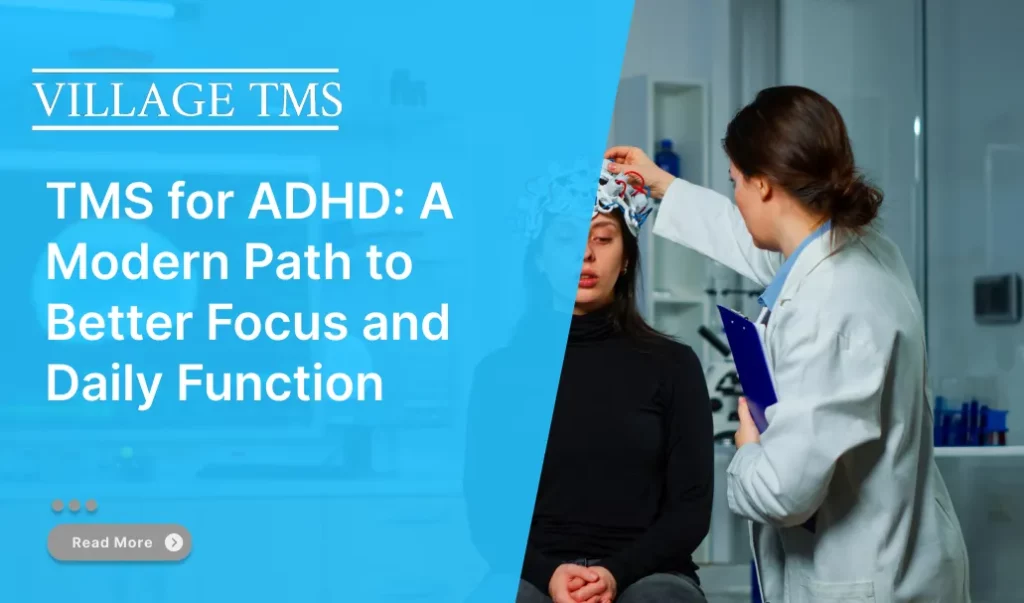
TMS therapy uses focused magnetic pulses to stimulate brain areas linked to attention and emotional control. Research shows that these pulses can influence brain activity in the prefrontal cortex. This region helps regulate planning, decision-making, and response inhibition.
For many adults, this area shows patterns of weak activation. TMS for ADHD works by strengthening communication between brain regions that impact behavior, focus, and impulse control. This is why TMS treatment is rising as a trusted method in clinics across the country.
Some TMS studies also review outcome measures tied to symptom improvement. These studies show that brain stimulation therapy can help normalize brain networks that support attention and mood. While every case differs, many patients report noticeable symptom relief across their treatment course.
People choose this method for several reasons. Many adults want an ADHD treatment that offers fewer systemic side effects. TMS therapy does not affect the whole body. It works only on targeted brain circuits. Most side effects are mild. Some people notice scalp discomfort or light fatigue.
TMS has no negative impact on thinking or memory. In fact, many adults notice better working memory after completing the full stimulation protocol. Others find that mood regulation improves with steady sessions. This can be helpful for people who deal with chronic stress or mood swings at work.
TMS is also appealing because it fits well with other treatment strategies. Some combine it with talk therapy or skills training. Others use it as part of a broader lifestyle plan. Many adults appreciate the structure and consistency it provides.

Your treatment plan begins with a full ADHD diagnosis review. A healthcare provider will check your history, evaluate ADHD symptoms, and create a plan that supports your goals. Our team maps the target area of your brain with care. We calculate your motor threshold to set the right intensity.
Sessions are brief. You sit comfortably while the device delivers a TMS pulse sequence to the prefrontal cortex. The stimulation feels light. You can return to work right after your session.
Our approach uses treatment protocols informed by TMS studies. We monitor treatment outcomes, symptom improvement, and response patterns as you progress.
Adults who struggle with focus at work often benefit the most. Many experts believe that stronger frontal activation supports clearer thinking and better time management. Others seek help when they feel stuck after trying medication. Some want a solution that avoids harsh side effects.
People with co-occurring health conditions like anxiety disorders or bipolar disorder may also see improvement. TMS is noninvasive. It does not introduce chemicals into the body. This makes it a viable choice when medication options are limited.
If you want a method that supports your brain function without major risks, TMS therapy may be the right direction.
Recent review articles and fMRI studies point to positive changes in brain function. Some research focuses on changes in executive function. Others highlight shifts in brain areas tied to attention or emotion. Most controlled trials use strict control groups when testing effect size and outcome measures.
While sample size varies across studies, many results show consistent progress. Adults notice better focus and greater control over impulses. Some also note improved mood regulation. These results make TMS a promising addition to modern ADHD management.
If focus, organization, or emotional control are holding you back, now is the time to act. TMS can help you create real and steady change without medication strain. Our team guides you through a clear plan that fits your schedule and your goals. You deserve support that works. Reach out to Village TMS today to schedule your evaluation. Let us help you move toward better focus, stronger performance, and a more stable daily life.
Take this next step, we’ll help with the others.
Most people notice only mild issues like scalp discomfort or brief fatigue. These effects fade quickly and do not interrupt daily tasks. Many adults continue work right after each session. TMS does not affect thinking or memory, which makes it easier to stay productive during treatment.
TMS targets the prefrontal cortex. This region supports planning and executive function. The stimulation helps strengthen activity in circuits that guide attention and impulse control. Many patients feel more organized and steady as treatment continues.
Most studies evaluate outcome measures such as changes in focus, mood, and daily performance. Clinicians track results across sessions to see patterns of progress. This helps shape future sessions and allows teams to adjust the plan as needed. Many adults notice steady improvement as consistency builds.
The Food and Drug Administration has cleared TMS for several mental health conditions. ADHD research continues to expand as more clinics adopt this method. Providers use evidence-based protocols to guide treatment and follow strict standards for safety. Many adults choose TMS because it avoids medication concerns.
Some adults suffering from PTSD report improved mood and steadier emotional control. TMS influences brain networks that connect to stress and trauma responses. While results vary, many people appreciate that the treatment is gentle and noninvasive. It can also be combined with therapy when needed.
TMS does not involve medication. It focuses on targeted stimulation of specific brain circuits. Many people combine it with therapy or lifestyle changes for broader support. It also appeals to adults who want a method that avoids systemic side effects.
ADHD management often includes therapy, structure, coaching tools, and medical support. TMS can fit into a broader plan for clearer thinking and better daily function. Many adults appreciate that TMS helps strengthen brain activity without interrupting their routine.
Some patients see faster processing and clearer thinking during and after treatment. This often appears after several consistent sessions. Better processing speed can lead to improved work performance and smoother communication. Many adults find these gains helpful in daily life.
Many adults report steady progress across their treatment course. Gains vary by person but often build gradually with regular sessions. Improved focus and emotional control can support long-term stability. This steady path makes TMS appealing for adults who need reliable change.
We use cookies to improve your experience on our site. By using our site, you consent to cookies.
Manage your cookie preferences below:
Essential cookies enable basic functions and are necessary for the proper function of the website.
These cookies are needed for adding comments on this website.
Google reCAPTCHA helps protect websites from spam and abuse by verifying user interactions through challenges.
Google Tag Manager simplifies the management of marketing tags on your website without code changes.
You can find more information in our Cookie Policy and Privacy Policy.