If you have been told you have treatment-resistant depression, or you have tried multiple medications with limited relief, you are probably asking a very practical question: How TMS Therapy works and what is actually happening inside the brain?
It is a fair question. Many people considering Transcranial Magnetic Stimulation in New York want more than a brochure-level explanation. They want to know whether this is science-backed, what brain regions are involved, whether it changes brain chemistry, and why it can succeed when antidepressants or talk therapy have not.
At Village TMS in New York City, treatment is grounded in neuroscience, not trends. Understanding how TMS therapy works can help you make a confident decision about whether it is the right next step for your mental health.
Major depressive disorder is not just about mood. It involves measurable changes in brain activity. Functional imaging studies show that certain regions become underactive or overactive, especially in people with chronic or severe depression.
One of the most studied areas is the left dorsolateral prefrontal cortex, a region involved in:
In many patients with depression, this area shows reduced activity. At the same time, deeper limbic structures involved in negative emotional processing may become overactive.
TMS therapy targets these circuits directly.
So how TMS therapy works on a biological level comes down to electromagnetic stimulation.
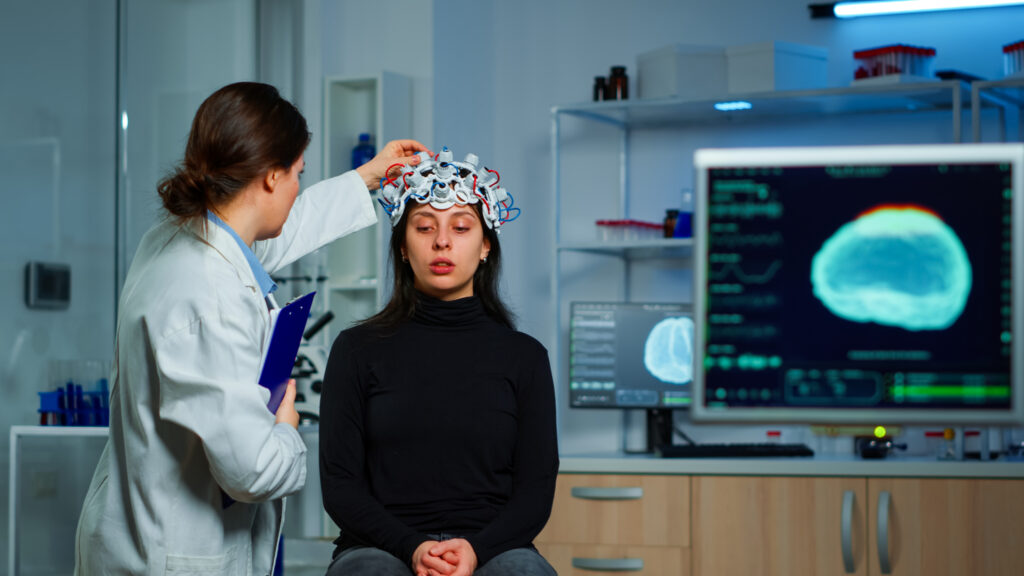
During a TMS session, a magnetic coil is placed gently against the scalp. The device delivers focused magnetic pulses that pass through the skull painlessly and induce small electrical currents in targeted brain tissue.
These pulses stimulate neurons in the prefrontal cortex.
Unlike electroconvulsive therapy, TMS does not require anesthesia and does not cause seizures. It is a non-invasive outpatient procedure.
In depression, the left prefrontal cortex often shows decreased neural firing. Repetitive Transcranial Magnetic Stimulation (rTMS) increases activity in this region.
Over time, repeated sessions strengthen synaptic connections through a process called neuroplasticity. Neurons that were underactive begin to fire more consistently. Brain networks start communicating more efficiently.
This is not a temporary mood lift. It is a gradual recalibration of dysfunctional circuits.
The prefrontal cortex connects to deeper structures such as the amygdala and anterior cingulate cortex. When prefrontal regulation improves, emotional reactivity can decrease.
Patients often report:
This circuit-based explanation is central to understanding how TMS therapy works beyond symptom management.
Many people in New York considering TMS therapy want to know what it actually feels like.
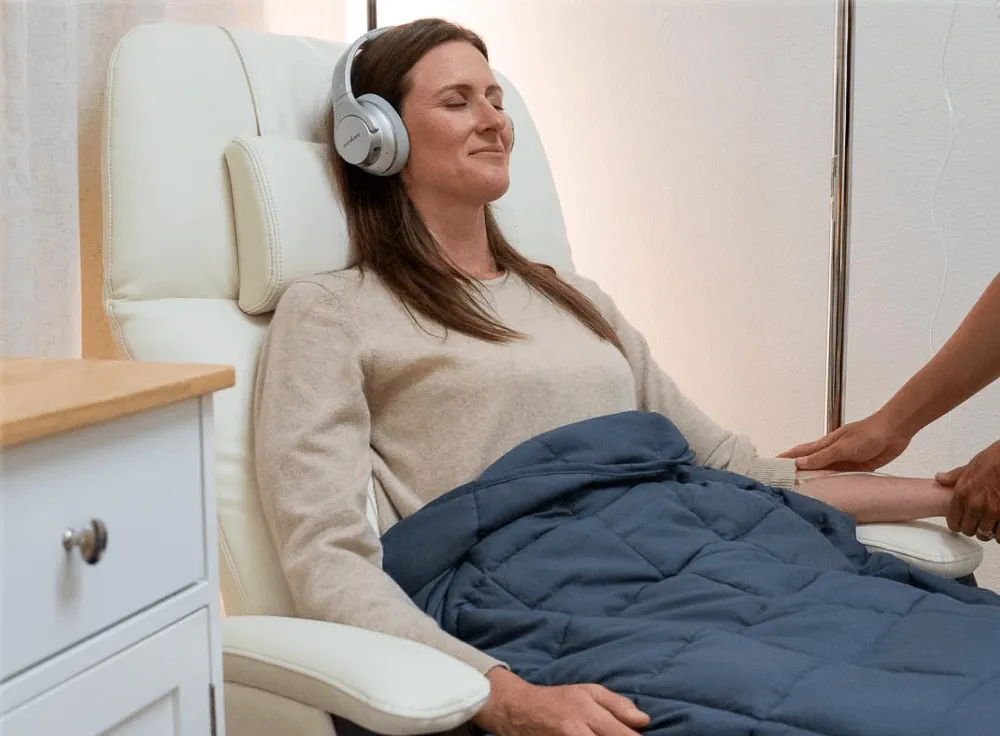
A standard session typically lasts 20 to 40 minutes, depending on the protocol used. You remain awake and seated in a treatment chair. The magnetic coil is positioned using measurements that align with your unique brain anatomy.
You may feel a tapping sensation on the scalp. Most patients describe it as mildly uncomfortable at first, but easily tolerable.
There is no sedation. You can drive yourself home and return to work afterward.
Treatment is usually delivered five days per week for four to six weeks, depending on your psychiatrist’s recommendation.
While TMS primarily acts on neural circuits, it also influences brain chemistry.
Research suggests that repeated stimulation can affect:
These changes are indirect. Instead of flooding the brain with medication that circulates systemically, TMS works locally and allows the brain’s natural signaling systems to recalibrate.
This is one reason many patients who are sensitive to antidepressant side effects find TMS appealing.
Transcranial Magnetic Stimulation is FDA-cleared for major depressive disorder and has been studied in thousands of patients.
Clinical trials show that a significant percentage of individuals with treatment-resistant depression experience meaningful symptom reduction. Many achieve full remission.
Neuroimaging studies demonstrate measurable changes in brain connectivity after a full course of treatment. These findings support the biological explanation of how TMS therapy works.
In New York City, TMS is widely used by psychiatrists for patients who have not responded to traditional interventions.
At Village TMS, patients may ask about differences between TMS, medication management, and ketamine therapy.
Antidepressants alter neurotransmitters throughout the entire brain and body. This can lead to systemic side effects such as weight changes, sleep disruption, or gastrointestinal symptoms.
Ketamine therapy acts rapidly by modulating glutamate and promoting synaptic growth. It is often used in severe or urgent cases.
TMS therapy, by contrast, is circuit-targeted and non-systemic. It focuses on the brain regions directly implicated in depression without affecting the rest of the body.
For many patients, understanding how TMS therapy works helps clarify why it may be appropriate as a next step after medication trials.
TMS therapy is often recommended for:
A psychiatric evaluation is necessary to determine eligibility. Certain conditions, such as implanted metallic devices near the head, may require additional screening.
Working with a specialized TMS clinic in New York ensures proper mapping, dosing, and monitoring.
ne of the most important aspects of how TMS therapy works is durability.
By repeatedly stimulating neural pathways, TMS promotes long-term potentiation, a process where synaptic connections become stronger over time.
This neuroplastic effect can lead to sustained improvements even after treatment ends. Some patients may require maintenance sessions, but many experience lasting relief.
Ongoing psychiatric support remains important. TMS is part of a broader mental health plan, not a standalone cure.
Understanding how TMS therapy works provides clarity. This is not a passive treatment. It is a targeted intervention designed to restore healthy brain circuit function through scientifically validated stimulation.
If you are living in New York and feel stuck despite medication or therapy, a consultation with an experienced TMS psychiatrist can help you explore whether this approach aligns with your goals.
Village TMS offers individualized evaluations and evidence-based treatment planning for patients seeking structured, neuroscience-informed care. A conversation is the first step toward determining whether TMS therapy is the right path forward.
Take this next step, we’ll help with the others.
TMS therapy targets the left dorsolateral prefrontal cortex, a region often underactive in major depressive disorder. Repetitive magnetic pulses stimulate neurons in this area, increasing neural firing and improving connectivity with mood-regulating networks. Over multiple sessions, this stimulation promotes neuroplasticity, allowing the brain to reorganize dysfunctional pathways. Functional imaging studies show improved communication between the prefrontal cortex and limbic structures after treatment. This circuit-based mechanism explains why Transcranial Magnetic Stimulation can reduce symptoms even when antidepressant medications have not worked.
TMS therapy is FDA-cleared and has been used safely for many years. It does not involve anesthesia, systemic medication exposure, or cognitive impairment. The most common side effects include mild scalp discomfort or temporary headache. Because TMS does not circulate through the bloodstream, it avoids many medication-related side effects. Long-term data show sustained improvement in many patients with treatment-resistant depression. Some individuals benefit from maintenance sessions under psychiatric supervision, especially in high-stress environments like New York City.
Most patients begin to notice subtle improvements within two to three weeks of starting repetitive Transcranial Magnetic Stimulation. Changes may include improved sleep, reduced rumination, or increased energy. Full therapeutic response often develops gradually over the course of four to six weeks. Because TMS works through neuroplastic changes rather than immediate chemical alteration, patience is important. Your psychiatrist will monitor symptom progression and adjust treatment parameters as needed.
Unlike electroconvulsive therapy, TMS does not cause memory loss. In fact, many patients report improved concentration and executive functioning as depressive symptoms improve. The magnetic pulses are localized to specific cortical regions and do not disrupt global brain activity. Clinical studies consistently show no negative cognitive side effects. This makes TMS an appealing option for professionals in New York who need to maintain daily functioning during treatment.
Yes. TMS therapy can be integrated into a broader psychiatric treatment plan. Some patients continue antidepressants during TMS. Others explore ketamine therapy in cases of severe or urgent depression. A board-certified psychiatrist will determine the safest and most effective approach. Combining modalities may be appropriate for complex mental health conditions, particularly when symptoms overlap or previous treatments have only partially helped. Click here to read what others have to say about us.
We use cookies to improve your experience on our site. By using our site, you consent to cookies.
Manage your cookie preferences below:
Essential cookies enable basic functions and are necessary for the proper function of the website.
These cookies are needed for adding comments on this website.
Google reCAPTCHA helps protect websites from spam and abuse by verifying user interactions through challenges.
Google Tag Manager simplifies the management of marketing tags on your website without code changes.
You can find more information in our Cookie Policy and Privacy Policy.