How Long Does Ketamine Last for Depression? What the Research Actually Shows

ketamine therapy for depression

If you are considering ketamine therapy for depression, the most important question is how long the relief actually lasts. Here is the direct answer: a single ketamine infusion typically produces antidepressant effects lasting between three and 14 days. A full induction course of six infusions over two to three weeks extends that window substantially, with many patients reporting sustained relief for four weeks to several months. Individual response varies widely, and the duration depends on factors including symptom severity, prior treatment history, and whether ketamine is paired with psychotherapy or maintenance dosing. The rest of this guide breaks down what the research shows and what to expect from your own response.

What We Know

  1. After a single ketamine infusion, antidepressant effects typically last three to 14 days for most patients, with some reporting relief that fades within a week.

  2. After a full induction course of six infusions over two to three weeks, sustained relief commonly lasts from four weeks to several months, and longer with periodic maintenance infusions.

  3. Duration depends on multiple factors: severity of depression, treatment history, whether ketamine is paired with psychotherapy, and individual biology.

How Long Does a Single Ketamine Infusion Last?

There is an important distinction to draw before answering this question. The drug ketamine clears your system within hours. The antidepressant effect, on the other hand, persists much longer because of what ketamine does to the brain rather than how long it stays in the body. Ketamine triggers a cascade of neuroplastic changes, modulating NMDA receptors and the glutamate system in ways that promote new neural connections, and those changes outlast the drug itself.

In published research from the National Institute of Mental Health, single subanesthetic-dose IV ketamine infusions in patients with major depressive disorder have produced rapid antidepressant effects within hours. The duration of those effects in early studies was typically reported in the range of three to seven days, with some patients experiencing relief lasting up to two weeks.

The strongest single-dose evidence is in patients with active suicidal ideation. A study from researchers at Massachusetts General Hospital examined the anti-suicidal effects of a single IV ketamine infusion in patients with treatment-resistant depression. Many patients showed clinically meaningful reductions in suicidal ideation within days, with some effects measurable out to 30 days, though early effects tended to diminish over the first week.

In practical terms: do not expect a single infusion to be a cure. Expect it to open a window of relief that gives you time to make other changes, and plan for the full course if your symptoms warrant it.

How Long Does a Full Course of Ketamine Therapy For Depression Last?

The standard ketamine protocol for depression is a series of six infusions over two to three weeks, often called the induction phase. Repeated dosing is what extends the duration of antidepressant benefit beyond what a single infusion can produce.

Protocols published by major academic medical centers describe a similar pattern. Antidepressant effects from early infusions in the induction phase often last only one to ten days. After the full induction course is complete, the typical duration of benefit extends to roughly three weeks, with significant variation between patients.

In real-world clinical practice, the picture is broader than the average. Some patients experience sustained remission lasting four weeks. Others maintain meaningful improvement for three to four months or longer. A smaller subset achieve durable remission that lasts a year or more without further treatment, though this is the exception rather than the expected outcome.

Maintenance infusions, scheduled every four to eight weeks based on how your symptoms track, are how most patients sustain the benefit of ketamine therapy for depression over the long term. The frequency is individualized: some patients need a booster every month, others go three months between sessions, and a smaller group can wait six months or more between treatments.

What Happens During a Typical TMS Session?

Many people in New York considering TMS therapy want to know what it actually feels like.

A standard session typically lasts 20 to 40 minutes, depending on the protocol used. You remain awake and seated in a treatment chair. The magnetic coil is positioned using measurements that align with your unique brain anatomy.

You may feel a tapping sensation on the scalp. Most patients describe it as mildly uncomfortable at first, but easily tolerable.

There is no sedation. You can drive yourself home and return to work afterward.

Treatment is usually delivered five days per week for four to six weeks, depending on your psychiatrist’s recommendation.

Timeline of Response: What to Expect Week by Week

Knowing what a typical response timeline looks like helps you set realistic expectations and recognize when something is going right (or going off track). Individual experience varies, but the pattern below is what most patients describe across the first three months.

Hours after the first infusion

Many patients notice an initial shift within hours of their first session. This often shows up as a sense of mental quiet, reduced negative thought patterns, or a noticeable lift in mood. Some patients describe the feeling as the volume on their depression turning down. Not every patient experiences this from session one, and the absence of an immediate response does not predict the outcome of the full course.

Days one through three

The strongest antidepressant effect typically lands between 24 and 72 hours after a session. Sleep often improves first, followed by motivation and emotional reactivity. Suicidal ideation, when present, often shows the most rapid improvement during this window.

Spravato NYC

Days four through seven

After a single infusion, many patients begin to notice the effect waning. Returning negative thought patterns, sleep disruption, or fatigue suggest it is time for the next session in the induction course. This is one of the reasons the standard protocol calls for two sessions per week during induction rather than a longer interval.

Weeks two through three (during induction)

The full antidepressant effect builds across the induction course. By the end of week three, patients who are responding to treatment typically report a stable, sustained improvement that does not fluctuate dramatically between sessions. Patients who have not responded by this point may need a different format, a different dose, or a different treatment approach entirely.

Weeks four through 12 (after induction)

This is when the variation in individual response becomes clearest. Some patients sustain remission throughout this window without further treatment. Others notice gradual symptom return between weeks four and eight, signaling the right time for a first booster. Tracking your mood objectively during this phase is valuable; it removes the guesswork from deciding when to schedule maintenance.

What Affects How Long Ketamine Lasts for You?

The wide range in published durations is not random. Several specific factors predict whether your response will be on the shorter or longer end.

Severity and chronicity of your depression

Patients with longer histories of severe, treatment-resistant depression often have shorter durations of response and need more frequent maintenance infusions. The brain has spent years in a particular pattern, and rebuilding takes more than a single course of treatment. Patients in their first severe depressive episode often respond more durably.

Whether the diagnosis is unipolar or bipolar

This is one of the most underreported findings in the ketamine literature. Research suggests that in patients with bipolar depression, the antidepressant effect of a single ketamine infusion may be shorter in duration than in patients with unipolar depression. The mechanism is not fully understood, but it likely reflects the different neurobiology of bipolar mood states. If you have bipolar disorder, you may need more frequent maintenance dosing to sustain benefit, and your treatment plan should reflect that.

Whether ketamine is paired with psychotherapy

The hours and days after a ketamine infusion are when neuroplasticity is highest. This is the window where structured psychotherapy, particularly approaches like ketamine-assisted therapy (KAP), can produce changes that outlast the drug itself. Patients who engage in integration therapy after sessions often experience longer-lasting improvements than those who treat ketamine as a stand-alone intervention.

Lifestyle factors during and after treatment

Sleep quality, stress management, exercise, and continued engagement with existing therapy all affect how long ketamine’s benefits last. The drug creates a window of opportunity. The behaviors you build into that window determine how long the door stays open.

Concurrent medications

Most patients can continue their existing antidepressants alongside ketamine therapy, and many do. A small number of medications can blunt ketamine’s effects, however, including high-dose benzodiazepines and lamotrigine. Your psychiatrist will review your full medication list before treatment and may adjust dosing or timing to optimize your response.

Ketamine for OCD

Ketamine vs. Traditional Antidepressants: Speed vs. Duration

It is worth comparing ketamine to traditional antidepressants directly, because the model of treatment is fundamentally different. SSRIs and SNRIs typically take four to six weeks to produce a noticeable effect, are taken daily, and continue working as long as you keep taking them. Stop the medication, and the effect generally fades within weeks.

Ketamine works in the opposite direction. Effects start within hours, last days to months from a single course, and require periodic re-dosing to maintain. There is no daily pill to take, and there are no daily side effects to manage between sessions. For patients who have struggled with the side-effect burden of SSRIs, this can be a meaningful difference in quality of life.

Neither model is universally better. Daily antidepressants are simpler, cheaper, and have a longer track record. Ketamine offers rapid relief and a different mechanism for patients who have not responded to traditional medications. The right choice depends on your history, your symptoms, and what has and has not worked for you in the past.

How Often Will I Need Maintenance Sessions?

There is no single answer because maintenance frequency depends on how your symptoms track after the induction course. The most common patterns we see are:

  • Scheduled maintenance every four to six weeks. The most common pattern, used by patients who notice symptoms beginning to return after about a month
  • Scheduled maintenance every two to three months. Used by patients whose response holds for longer between treatments
  • Symptom-driven re-dosing. The patient comes in for a booster only when specific warning signs appear, such as sleep disruption, loss of motivation, or returning intrusive thoughts
  • Combined with seasonal patterns. Patients with seasonal affective tendencies may schedule additional sessions in the fall and winter

The right schedule for you should be built around your specific response pattern, not a generic protocol. Track your mood after the induction course and discuss the timing of any first booster with your psychiatrist.

How Spravato Compares for Duration

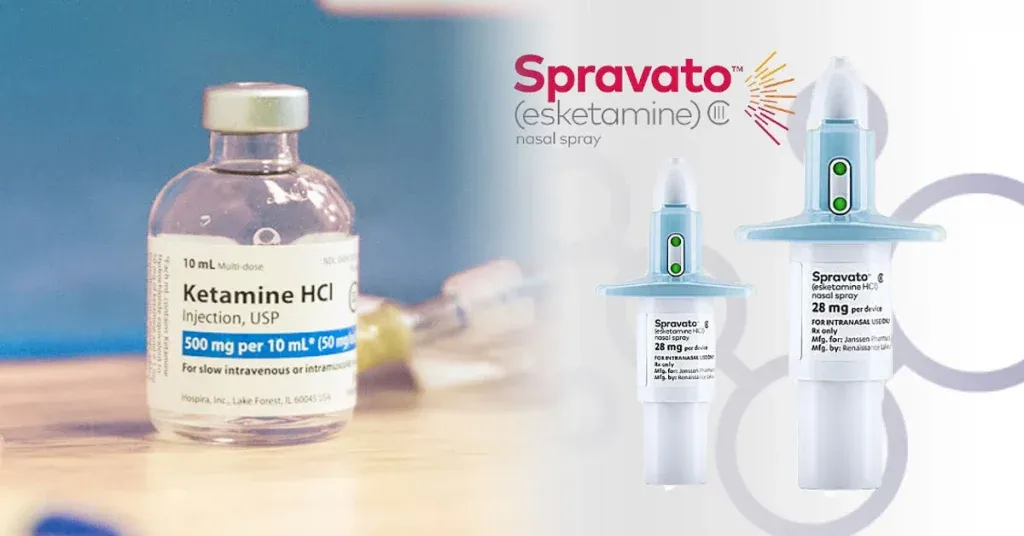
Spravato (esketamine) is the FDA-approved nasal spray form of ketamine. The protocol is structured differently from IV ketamine: an eight-week induction phase with twice-weekly dosing for the first month, then once-weekly dosing for the second month, followed by individualized maintenance, typically once every one to two weeks. Because the dosing schedule is more frequent and continuous, Spravato produces a different duration profile than IV ketamine. Rather than longer windows of relief between sessions, the model is steadier, lower-dose contact with the medication. Many patients prefer this pattern, especially those whose insurance covers Spravato but not IV ketamine. You can read more on our Spravato page.

How to Make Ketamine's Effects Last Longer

Patients often ask whether there is anything they can do to extend the duration of their response. The honest answer is that you cannot magically prolong ketamine’s effects, but you can structure the time around your treatment to make the most of the neuroplasticity window.

  • Engage in structured psychotherapy, ideally integration therapy, in the days following each session
  • Prioritize sleep in the week after a session. Disrupted sleep is one of the strongest predictors of mood relapse
  • Maintain your existing medications unless your psychiatrist advises a change
  • Use the post-session window to build new patterns: exercise routines, social connection, and any other habits that support mental health
  • Track your mood objectively. A simple daily mood log helps you and your psychiatrist identify when a booster is genuinely needed
mental health support NYC

When to Consider Booster Infusions

The right moment for a booster is when you notice early signs of symptoms returning, not when you have fully relapsed. Patients who wait until they are back at baseline often need a longer course to recover, while patients who book a booster at the first signs of decline tend to maintain stable mood with less treatment overall. Common early signs include disrupted sleep, fatigue that does not respond to rest, returning negative thought patterns, or loss of motivation that persists for more than a week. If you notice these, contact your psychiatrist promptly. For an overview of what booster sessions typically cost, see our ketamine cost page.

Ketamine Therapy at Village TMS in NYC

At Village TMS, ketamine therapy for depression is delivered by Dr. Yuli Fradkin, MD, a psychiatrist with more than 25 years of experience and academic posts at Beth Israel, Tufts, Yale, and Rutgers, alongside Dr. Elena Bruck, MD, who brings nearly twenty years of clinical practice in Vienna and New York. We offer all three ketamine formats (IV, IM, and Spravato) in our Manhattan office, with continuous monitoring and integration therapy support across every course of treatment. If you have been struggling with treatment-resistant depression and are wondering whether ketamine is right for you, the first step is a free consultation. We review your full history, set realistic expectations for response and duration, and build a plan that fits your situation.

Ready to Find Out If Ketamine Is Right for You?

Understanding how long ketamine lasts is one part of the decision. The other is whether the treatment fits your specific history, your insurance situation, and the goals you have for your mental health. The Village TMS team is here to walk you through the science, the practical questions, and the next steps.

Contact us here to book a consultation.

Call us now to get your FREE consultaion

Take this next step, we’ll help with the others.

Explore More Blog Posts

Frequently Asked Questions

We've Got Answers

How long does a ketamine therapy for depression treatment last?

For most patients, the antidepressant effect of a single infusion lasts three to seven days, with some patients experiencing relief up to two weeks. The drug itself clears your system in hours, but the neuroplastic changes that produce the antidepressant effect outlast the drug.

Does ketamine work long-term for depression?

Yes, for many patients, with the caveat that long-term response usually requires periodic maintenance infusions. After a full induction course, sustained relief commonly lasts four weeks to several months, and maintenance infusions every four to eight weeks help sustain that benefit. A smaller subset of patients achieve durable remission without further treatment.

What happens when ketamine wears off?

Symptoms can return gradually as the antidepressant effect fades. Early signs typically include disrupted sleep, returning negative thought patterns, and loss of motivation. The right response is to schedule a booster session at the first signs of decline rather than waiting for full relapse.

Is ketamine's antidepressant effect permanent?

For most patients, no. Ketamine is best understood as a tool that produces sustained but not permanent relief, and most patients benefit from periodic maintenance dosing to maintain stability. A minority of patients do experience durable remission after a full course, but this should not be the default expectation.

Can TMS Be Combined with Medication or Ketamine Therapy?

Yes. TMS therapy can be integrated into a broader psychiatric treatment plan. Some patients continue antidepressants during TMS. Others explore ketamine therapy in cases of severe or urgent depression. A board-certified psychiatrist will determine the safest and most effective approach. Combining modalities may be appropriate for complex mental health conditions, particularly when symptoms overlap or previous treatments have only partially helped. Click here to read what others have to say about us. 

How will I know if ketamine is working for me?

The most reliable signs are improvements in sleep, energy, motivation, and the ability to do things you have been avoiding. Many patients also report a reduction in negative self-talk and intrusive thoughts within days of the first infusion. Tracking your mood objectively, ideally with a simple daily log, makes it easier to spot meaningful change and to communicate with your psychiatrist about your response.