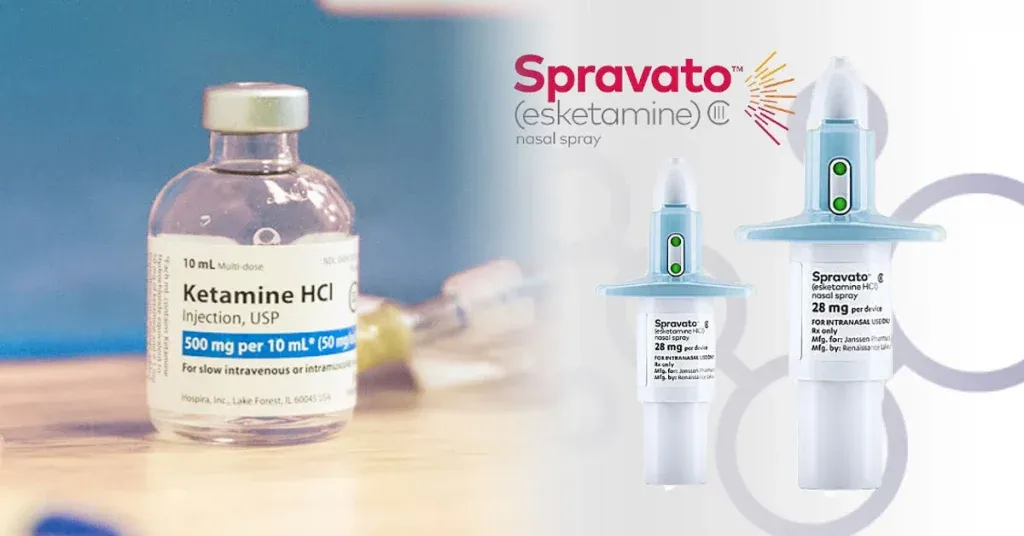
If you are choosing between Spravato and IV ketamine, the honest answer is that neither is universally better; they are two effective treatments with different strengths. Spravato is the FDA-approved esketamine nasal spray, which means it is covered by most insurance plans and follows a standardized protocol. IV ketamine offers precise dose control and a longer clinical track record for a wider range of conditions, but it is usually paid out of pocket. This guide compares Spravato vs IV ketamine fairly across how they work, cost, insurance, the evidence, and the patient experience, so you can decide with your psychiatrist which fits your situation.
| What we know
1. Spravato (esketamine) and IV ketamine work through the same brain system, the glutamate and NMDA receptor pathway, and both are effective for treatment-resistant depression. 2. The biggest practical difference is insurance: FDA-approved Spravato is covered by most major insurers, while IV ketamine is usually paid out of pocket. 3. Neither is universally better. The right choice depends on your insurance, your diagnosis, your treatment history, and your preferences, and is best made with a psychiatrist. |
What Spravato and IV Ketamine Have in Common
Before the differences, it helps to understand how similar these treatments are at the core. Spravato is the brand name for esketamine, which is one of the two mirror-image molecules that make up ketamine. IV ketamine uses racemic ketamine, meaning both molecules together.
Both work through the same fundamental mechanism. They act on the brain’s NMDA receptors and modulate glutamate, the brain’s most abundant excitatory neurotransmitter, promoting neuroplasticity, the formation of new neural connections. Both can produce rapid antidepressant effects, often within hours to days, far faster than standard antidepressants. Both are delivered in a clinical setting under supervision, and both can cause similar side effects, including dissociation, dizziness, and a temporary rise in blood pressure. In short, the science underneath is closely related. The meaningful differences are in how they are delivered, regulated, and paid for.
How They Are Administered
This is the most visible difference between the two treatments.
Spravato (Esketamine) Nasal Spray
Spravato is self-administered as a nasal spray, under the supervision of clinical staff, in a certified treatment center. There are no needles and no IV line. After dosing, patients are monitored in the clinic for at least two hours before going home. The standard protocol involves twice-weekly dosing for the first month, then weekly or every-other-week dosing, adjusted over time.
IV Ketamine Infusion
IV ketamine is delivered intravenously through a line placed in the arm or hand, over about 40 to 60 minutes, with continuous monitoring. The IV route allows the dose to be controlled precisely and adjusted during the session. A standard induction course is typically six infusions over two to three weeks, followed by maintenance sessions as needed.
FDA Approval and Regulation
This difference drives much of what follows. Spravato (esketamine) received FDA approval for treatment-resistant depression in 2019, and is also approved for depressive symptoms in adults with major depressive disorder and acute suicidal ideation or behavior. Because it is FDA-approved, it is dispensed through a restricted program with required in-clinic monitoring. You can read the official information from the FDA’s announcement of Spravato’s approval. IV ketamine, by contrast, is FDA-approved as an anesthetic but not specifically for depression or other mental health conditions. Using it for depression is an off-label use, which is legal, common, and well-supported by clinical evidence, but it is not the same regulatory status as Spravato.
Cost and Insurance: The Biggest Practical Difference
For many patients, this is the deciding factor.
Because Spravato is FDA-approved, it is covered by most major insurance plans, including Aetna, Blue Cross Blue Shield, Cigna, United Healthcare, and Medicare, when treatment-resistant depression criteria are met. For an insured patient, out-of-pocket cost can come down to a specialist co-pay. IV ketamine is generally not covered by insurance because it is off-label, so most patients pay out of pocket, typically $400 to $800 per session. For a detailed breakdown, see our guide to ketamine therapy costs and our guide to what insurance covers.
The honest summary: if you have insurance and meet the criteria, Spravato is usually the more affordable option. If you are paying out of pocket either way, the cost difference narrows and other factors matter more.
Spravato vs IV Ketamine: A Side-by-Side Comparison
| Factor | Spravato (Esketamine) | IV Ketamine |
| Form | Nasal spray | Intravenous infusion |
| FDA status | FDA-approved for TRD | Off-label for depression |
| Insurance | Usually covered | Usually not covered |
| Dose control | Standardized doses | Precise, adjustable |
| Time in clinic | About 2 hours (monitoring) | About 1 hour plus recovery |
| Conditions used for | Treatment-resistant depression | Depression, anxiety, PTSD, OCD, more |

What the Evidence Shows
Both treatments are supported by evidence, and it is worth being precise about what that evidence does and does not say.
Spravato’s FDA approval was based on clinical trials showing it is effective for treatment-resistant depression. IV ketamine has a longer track record in research and clinical practice, including for conditions beyond depression, though much of that use is off-label. Importantly, the two have rarely been compared head-to-head in large trials. Some real-world studies that have compared them suggest broadly similar effectiveness for depression, with minor differences that may reflect the route of administration. The fair conclusion is that both are effective for treatment-resistant depression, and the evidence does not crown a clear winner. Anyone claiming one is decisively superior is going beyond what the research currently supports.
Which Conditions Each Is Used For
Spravato’s FDA approval is specifically for treatment-resistant depression and for depressive symptoms with acute suicidal ideation. That is the population it is designed and approved for.
IV ketamine is used for a broader range of conditions, including treatment-resistant depression but also anxiety, PTSD, OCD, bipolar depression, and certain chronic pain conditions. This wider applicability is a function of the off-label flexibility of IV ketamine. If your situation involves a condition other than treatment-resistant depression, IV ketamine may be the more relevant option simply because Spravato is not approved for it.

Which Treatment Is Right for You?
There is no single answer, but a few patterns help guide the decision.
Spravato often makes sense if you have treatment-resistant depression, you have insurance that covers it, you prefer a needle-free option, and a standardized protocol appeals to you. IV ketamine often makes sense if you need treatment for a condition other than treatment-resistant depression, if precise dose control is clinically valuable for you, or if you are paying out of pocket and want the format with the longest track record for your specific situation.
Many patients are genuinely good candidates for either, and the choice comes down to insurance and personal preference. The best way to decide is a consultation with a psychiatrist who offers both, so the recommendation is based on your needs rather than on whichever format a clinic happens to provide.
Discuss Your Options With Village TMS
Village TMS in Manhattan offers both Spravato and IV ketamine, along with intramuscular ketamine, which means we can recommend the option that genuinely fits your diagnosis, insurance, and preferences rather than steering you toward a single format. Care is led by Dr. Yuli Fradkin, MD, a psychiatrist with more than 25 years of experience, alongside Dr. Elena Bruck, MD. Call 646-817-2835 or contact us to book a free consultation and talk through which treatment is right for you.