
Medically reviewed by Yuli Fradkin, MD, board-certified psychiatrist | Last reviewed November 2026
Most people who start Spravato have already lived through the side effects of several antidepressants: the weight gain, the flatness, the weeks of waiting. Spravato is different in a way that surprises them. Its side effects arrive quickly, inside the first hour after a dose, and most of them fade the same day. That is exactly why the medication is only given in a certified clinic, with a clinician watching you for at least two hours before you go home.
This guide explains the side effects reported in the clinical trials, what dissociation actually feels like, what happens to your blood pressure, how long each effect lasts, the rare but serious risks and who should not take Spravato. It is written from the clinic side: what our team is watching for during the observation period and why. For the treatment itself, see our page on Spravato treatment in NYC.
What We Know
|
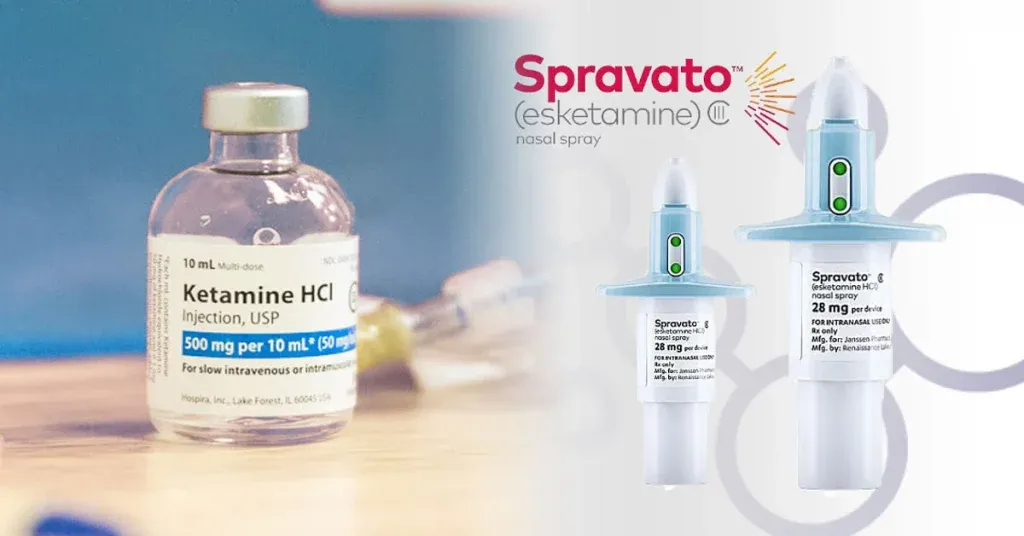
What are the most common Spravato side effects?
The most common Spravato side effects are dissociation, dizziness, nausea, sedation and vertigo. Because Spravato is esketamine, these are also the esketamine side effects most often reported in research. The figures below come from the adverse reactions table in the FDA prescribing information, which compares 346 patients taking Spravato plus an oral antidepressant with 222 patients taking a placebo spray plus an oral antidepressant in the short-term trials for treatment-resistant depression.
Since January 2025, Spravato is also approved on its own, without an oral antidepressant. In that monotherapy trial, the pattern of side effects was similar, though the rates were lower: dissociation in 28 percent of patients versus 4 percent on placebo, nausea in 25 versus 8 percent, dizziness in 22 versus 7 percent and sedation in 6 versus 2 percent, according to the current prescribing information. The two trials enrolled different patients, so the numbers are not directly comparable.
| Side effect | Spravato + oral antidepressant | Placebo + oral antidepressant |
|---|---|---|
| Dissociation | 41% | 9% |
| Dizziness | 29% | 8% |
| Nausea | 28% | 9% |
| Sedation | 23% | 9% |
| Vertigo | 23% | 3% |
| Headache | 20% | 17% |
| Altered taste (dysgeusia) | 19% | 14% |
| Numbness or reduced sensation (hypoesthesia) | 18% | 2% |
| Anxiety | 13% | 6% |
| Lethargy | 11% | 5% |
| Blood pressure increased | 10% | 3% |
| Vomiting | 9% | 2% |
| Feeling drunk | 5% | 0.5% |
| Euphoric mood | 4% | 1% |
Two things stand out about the side effects of Spravato. First, most of these effects are tied to the dosing session itself rather than to the days in between, which is the opposite of how daily antidepressant side effects behave. Second, several of them, such as headache and altered taste, also appear often in the placebo group, so not every symptom on a treatment day is caused by the medication.
These effects can make the first sessions uncomfortable, and some people stop for that reason. In one of the pivotal trials, published in the American Journal of Psychiatry, 7 percent of patients on Spravato stopped because of side effects, compared with 0.9 percent in the comparison group. Most patients continued, and our team adjusts how we support you in the room based on how your first sessions go. Across the short-term trials pooled in the prescribing information, 4.6 percent of adults under 65 stopped because of an adverse reaction, compared with 1.4 percent on placebo.
Dissociation: what does it feel like?
Dissociation is a temporary feeling of being detached from your body, your surroundings or your sense of time. It is the single most common Spravato side effect, and when researchers measured it with a standard scale, 61 to 84 percent of patients showed some dissociative or perceptual change during sessions. It usually starts within minutes of dosing and fades the same day.
Patients describe it in different ways:
- Feeling as though you are floating, or watching yourself from slightly outside your body
- Your surroundings seeming dreamlike, distant or less solid than usual
- Time stretching or compressing, so that 20 minutes feels like 5
- Changes in how sounds, colors or your own limbs feel
- Numbness or tingling, which shows up in the trials as reduced sensation
For some people the experience is calm or even pleasant. For others it is unsettling, especially the first time. Knowing what to expect helps, and so does having someone in the room. Our team stays with you, checks in, and can talk you through it. Our article on what ketamine therapy feels like describes similar sensations, since Spravato and ketamine act on the same brain system.

What happens to your blood pressure?
Spravato raises blood pressure for a few hours after each dose. According to the prescribing information, the peak comes about 40 minutes after dosing and the rise lasts about 4 hours. On average, systolic pressure rose about 7 to 10 mmHg and diastolic pressure about 4 to 6 mmHg more than with placebo at the 40-minute mark.
Most people never feel this increase, but a minority have a larger spike. In the trials of Spravato with an oral antidepressant, 8 percent of patients had a systolic rise of 40 mmHg or more, compared with 0.5 percent on placebo, and 13 percent had a diastolic rise of 25 mmHg or more, compared with 3 percent. That is why the label calls for blood pressure to be checked before dosing, rechecked at about 40 minutes and monitored as needed afterward.
In practice, this is what our team does at each visit:
- Checks your blood pressure before you take the spray, and waits or reschedules if it is too high
- Rechecks it around the 40-minute mark, when the rise is usually greatest
- Keeps monitoring until it is coming down and you have been clinically stable for at least 2 hours
- Contacts emergency care if symptoms such as chest pain, shortness of breath, a sudden severe headache or vision changes appear, which the label lists as reasons for immediate evaluation
How long do Spravato side effects last?
Most Spravato side effects last minutes to hours, not days. Dissociation, dizziness and sedation tend to be strongest in the first hour and ease over the rest of the session. The prescribing information reports that most nausea and vomiting episodes resolve the same day, with a median duration of about an hour or less, and that cognitive slowing seen 40 minutes after a dose was comparable to placebo by 2 hours.
| Effect | When it starts | How long it typically lasts |
|---|---|---|
| Dissociation and dizziness | Within minutes of dosing | Strongest in the first hour, fading the same day |
| Sedation | Within the first hour | Can be delayed or prolonged, which is why monitoring lasts 2 hours |
| Blood pressure rise | Builds after dosing | Peaks around 40 minutes, lasts about 4 hours |
| Nausea or vomiting | During the session | Usually the same day, median about an hour or less |
| Slowed thinking and reaction time | Around 40 minutes | Comparable to placebo by 2 hours, but driving is still not allowed until the next day |
Many patients find that the effects feel less intense after the first few sessions, partly because they know what to expect. If a side effect is not easing over time, tell your psychiatrist, since the dose can be adjusted between 56 mg and 84 mg for patients with treatment-resistant depression.
Why can’t you drive on the day of treatment?
Spravato can impair attention, judgment, thinking, reaction speed and motor skills, and those effects can outlast how you feel. The FDA label instructs patients not to drive or operate machinery until the next day after a restful sleep, even if they feel completely normal when they leave the clinic.
That rule is the reason every patient needs a ride home arranged before each visit. Plan for a family member, friend, taxi or rideshare, and avoid scheduling anything that needs full concentration for the rest of the day. Our upcoming guide to what happens during Spravato treatment walks through how to plan a treatment day from arrival to getting home.
What does the 2-hour observation actually catch?
The 2-hour observation period exists because the effects that matter most for safety happen inside it. The SPRAVATO REMS program requires certified healthcare settings to supervise each dose and monitor patients for at least 2 hours, and the label describes what that monitoring is looking for. The clinic also documents every session on a REMS patient monitoring form.
- Sedation, including the rare cases where a patient becomes unresponsive. In the trials, 48 to 61 percent of patients had some sedation and 0.3 to 0.4 percent lost consciousness.
- Breathing changes. Respiratory depression has been reported after approval, so the label calls for respiratory monitoring, including pulse oximetry.
- Blood pressure spikes, which peak inside the monitoring window.
- Distress during dissociation, which our team can help you through in the moment.
- Your readiness to leave. A clinician assesses that you are clinically stable before discharge, and some patients stay longer than 2 hours.
This in-clinic model is also why Spravato is more often covered by insurance than off-label IV or IM ketamine. Our breakdown of how much Spravato costs explains how the observation period is billed. At Village TMS, we are in network for Spravato with Aetna, Cigna, Optum and TRICARE East (Humana Military). For other commercial plans we can request a single case agreement, though approval is the insurer’s decision. We do not currently bill Medicare or Medicaid for Spravato.
What are the rare and serious risks?
Spravato carries a boxed warning, the FDA’s strongest label warning, for sedation, dissociation, respiratory depression, abuse and misuse, and suicidal thoughts and behaviors. These risks are the reason for the restricted program, and most are managed by the monitoring described above.
- Abuse and misuse. Spravato contains esketamine, a Schedule III controlled substance, and it is never sent home with patients. Your psychiatrist screens for a history of substance use before treatment.
- Suicidal thoughts. Like other antidepressants, the label warns of increased suicidal thoughts and behaviors in adolescents and young adults, and patients of any age should be watched for worsening mood.
- Urinary symptoms. The label notes more lower urinary tract symptoms than with placebo, although no cases of esketamine-related interstitial cystitis were seen in studies lasting up to a year.
- Pregnancy. Spravato may cause fetal harm and is not recommended during pregnancy.
If you or someone you know is having thoughts of suicide, call or text 988, the Suicide and Crisis Lifeline, or call 911 in an emergency.

Who shouldn’t take Spravato?
Spravato is not safe for everyone. The FDA label lists three contraindications: aneurysmal vascular disease (including the aorta, brain and peripheral arteries) or an arteriovenous malformation, a history of bleeding in the brain, and hypersensitivity to esketamine, ketamine or the spray’s ingredients.
Other conditions call for careful evaluation rather than an automatic no, including high blood pressure, heart or blood vessel disease, a history of psychosis, past or current substance use and pregnancy. Before your first session, our care team reviews your medical history, current medications and blood pressure. Our article on who is not a good candidate for ketamine therapy covers screening for this class of treatment in more detail.
Do the side effects get easier over time?
For many patients, yes. The first few sessions are usually the most unfamiliar, and knowing what is coming makes dissociation less alarming. Treatment also becomes less frequent over time: the labeled schedule moves from twice-weekly sessions in weeks 1 to 4, to weekly in weeks 5 to 8, to weekly or every other week after that.
That longer-term phase matters because stopping too early carries its own risk. In a relapse-prevention study published in JAMA Psychiatry, patients in stable remission who continued Spravato had a 51 percent lower risk of relapse than those switched to placebo. Our roundup of what Spravato patients report covers how people experience treatment over months, and our Spravato vs IV ketamine comparison explains how the two differ.