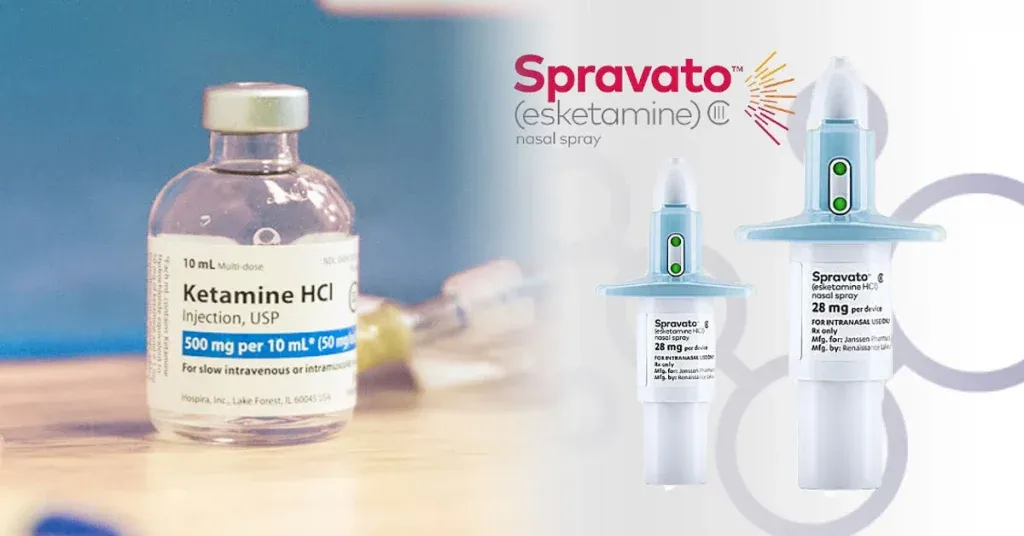
Spravato reviews online range from life-changing to disappointing, which is exactly what you would expect from a treatment used almost exclusively by people who have already failed multiple other options. Rather than weighing individual reviews, this article looks at what the pivotal trials that led to FDA approval actually found, how those numbers compare to real-world outcomes, and what patients consistently report as the pros and cons.
What We Know
|
What the pivotal trials actually found
TRANSFORM-1 and TRANSFORM-2
These were the short-term, randomized, placebo-controlled trials that supported Spravato’s 2019 FDA approval for treatment-resistant depression. In TRANSFORM-2, the pivotal positive trial, 69 percent of patients on Spravato plus a new antidepressant responded by day 28, compared to 52 percent on antidepressant plus placebo spray, with a clinically meaningful difference on standard depression rating scales. TRANSFORM-1 showed a similar direction: roughly 53 percent response with Spravato compared to 31 percent with placebo.
ESCAPE-TRD
This later trial compared Spravato treatment directly against quetiapine extended-release, a commonly used antipsychotic augmentation strategy for treatment-resistant depression, rather than against placebo. Patients on Spravato were about 1.5 times more likely to reach remission by week 8 (27.1 percent versus 17.6 percent) and about 1.55 times more likely to stay relapse-free for up to 32 weeks after reaching remission.
How real-world outcomes compare
Real-world data tends to look more favorable than controlled trials, which makes sense given how differently the two are structured. A French retrospective study, ESKALE, reported roughly 65 percent of patients achieving clinical response over 12 months of follow-up. Larger real-world datasets have reported similarly encouraging figures, with some clinics citing response rates as high as 75 to 80 percent in well-selected patient groups receiving consistent supportive care alongside treatment. These numbers are generally higher than trial data because real-world patients are more heterogeneous, treatment duration is often longer and more flexible, and outcome definitions vary by clinic.
What patients report as the pros
- Faster onset than oral antidepressants, with some patients reporting mood changes within hours to days rather than the four to six weeks typical of SSRIs and SNRIs
- Effectiveness after multiple failed medication trials, which is the population Spravato is specifically studied and approved for
- A meaningfully lower rate of treatment-emergent sexual dysfunction compared to standard antidepressants, reported in under 1 percent of patients in review literature
- Close clinical monitoring during every dose, which many patients describe as reassuring rather than burdensome once they get used to the routine

What patients report as the cons
- Dissociation that feels intense, particularly during the first one or two sessions before patients know what to expect
- The twice-weekly, two-hour in-clinic visits required during the initial four-week induction phase, which is a real time commitment
- Cost and insurance friction, including prior authorization requirements tied to documentation of prior failed medication trials
- Nasal irritation or an unpleasant taste from the spray itself, a minor but frequently mentioned complaint
None of these cons are safety concerns on their own. They mostly reflect the reality that Spravato requires more structure and monitoring than taking a daily pill, which is the tradeoff for its more restricted safety profile and REMS requirements.
A word on reading Spravato reviews
As with any treatment reserved for people who have already tried and failed other options, review sites will overrepresent both dramatic successes and dramatic disappointments. The trial and real-world data above reflect outcomes across full patient populations, which is a more reliable way to set expectations than any single review, positive or negative.
Call 646-817-2835 or contact us to book a free consultation.