Most clinics say their patients get better. Fewer explain how they know If you are deciding where to spend six weeks of your life and, in many cases, a meaningful amount of money, you deserve more than testimonials. You deserve to know how results are measured, what counts as success, how a clinic’s numbers compare with published research and what happens to the people who do not improve.
This page is our answer. It explains how we measure outcomes at Village TMS, what response and remission mean, what the research predicts for TMS, Spravato and ketamine, what patients typically experience along the way and why your own result may differ from any average. If you want the research side in more depth first, our article on TMS success rates covers the published trials.
What We Know
|

Why do outcome measures matter?
We focus on measured outcomes because they are the most honest way to set expectations. A star rating tells you how people felt about a visit. A rating scale tells you whether their depression changed, by how much and for how many of them. Both are useful, but only one of them answers the question you are really asking.
Publishing results also holds us to a standard. When you can see what share of patients respond, what share reach remission and what share do not improve, you can judge whether our recommendations are grounded in reality. Our article on TMS therapy reviews explains why reviews and outcome data often tell different stories.
How do we measure outcomes?
We measure outcomes with validated rating scales completed before treatment, during the course and at the end. Your psychiatrist tracks progress with these measures throughout and adjusts your protocol when the numbers show it is needed, rather than relying on a general sense of how things are going.
The most common tool is the PHQ-9, a nine-question self-report questionnaire that asks how often specific depression symptoms have bothered you over the past two weeks. In the original validation study of 6,000 patients, higher PHQ-9 scores were closely linked to worse daily functioning, more sick days and greater use of health care, and a score of 10 or more identified major depression with 88 percent sensitivity and 88 percent specificity. The scale runs from 0 to 27:
- 0 to 4: minimal symptoms
- 5 to 9: mild depression
- 10 to 14: moderate depression
- 15 to 19: moderately severe depression
- 20 to 27: severe depression
Because the PHQ-9 is self-reported, it captures how you experience your symptoms. Clinician-rated scales add a second view. Insurers also ask for these scores at the start and end of a TMS course, which our guide to what each insurer requires for TMS explains.
What do response and remission mean?
Response and remission are the two standard ways to describe improvement. Response usually means your depression score has dropped by at least half from where it started. Remission means your score has fallen into the minimal range, so symptoms are largely gone rather than merely reduced.
The gap between the two matters. A patient who starts with a PHQ-9 of 22 and finishes at 10 has responded, because the score fell by more than half, but has not reached remission. That is still a real change: it can mean returning to work, sleeping through the night or enjoying things again. Partial improvement is a legitimate outcome worth building on, and it often guides the next step, whether that means extending treatment, adding therapy or trying a different approach.
What does published research predict for TMS?
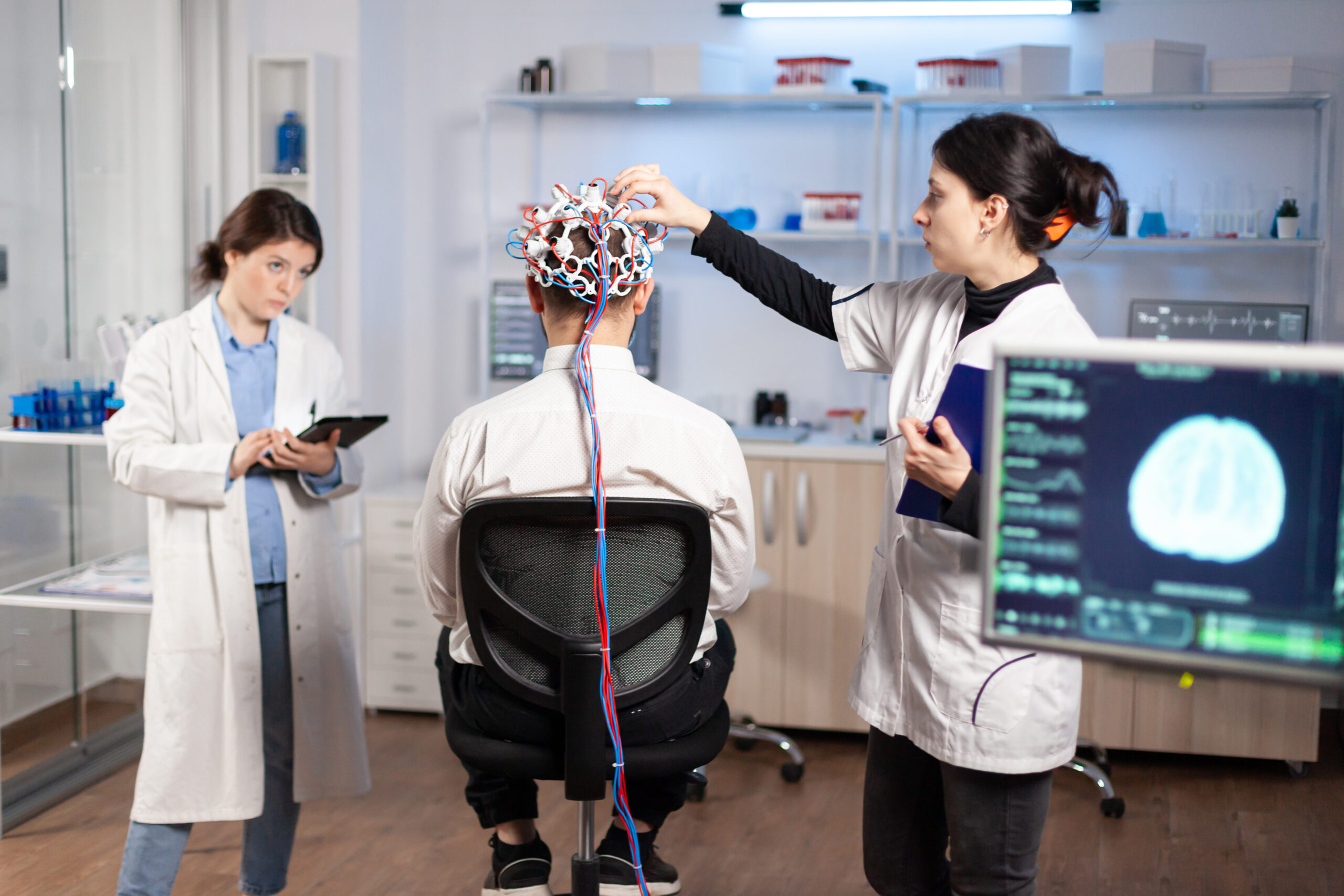
Published research gives a useful benchmark for TMS. In a multisite study published in Depression and Anxiety in 2012, 307 outpatients with major depression were treated at 42 US clinical practices under everyday conditions rather than a tightly controlled trial. On the clinician-rated scale, 58 percent responded and 37.1 percent reached remission. On the patient-rated PHQ-9, 56.4 percent responded and 28.7 percent reached remission.
That study is especially relevant because it reflects real clinics, not research centers, and it is the same source cited on our TMS therapy page. Controlled trials report response of roughly 50 to 60 percent and remission of 30 to 40 percent in treatment-resistant depression, which our complete guide to TMS therapy places in context.
What does published research predict for Spravato and ketamine?
Spravato
In the pivotal trial that supported Spravato’s approval, about 69 percent of patients taking Spravato with a newly started antidepressant responded by day 28, compared with about 52 percent on an antidepressant with a placebo spray. A later head-to-head trial found Spravato patients were about 1.5 times more likely than patients on quetiapine extended-release augmentation to reach remission by week 8, in an open-label trial. Our roundup of what Spravato patients report covers both trials and real-world data, and our Spravato NYC page explains how treatment works here.
IV ketamine
The largest head-to-head trial of IV ketamine, known as ELEKT-D and published in the New England Journal of Medicine, randomized 403 adults with treatment-resistant depression without psychotic features to ketamine or electroconvulsive therapy. After three weeks, 55.4 percent of ketamine patients responded compared with 41.2 percent of ECT patients, on a patient-rated scale, as reported by Psychiatric News. The trial was open-label and excluded psychotic depression, which still responds best to ECT.
Ketamine’s benefits can fade without maintenance, which our article on how long ketamine lasts for depression explains, and our ketamine therapy page describes the IV, IM and Spravato options we offer.
What do patients experience during a TMS course?
Most patients describe TMS as gradual. Changes tend to arrive quietly, often in sleep, energy or motivation before mood itself, and they build over weeks rather than appearing all at once. Many patients feel improvement within three to five weeks.
- Week 1: the first session includes a one-time calibration that adds about 15 to 20 minutes. Scalp discomfort or a mild headache is most noticeable this week, and mood changes are uncommon yet.
- Weeks 2 to 3: side effects usually ease as the scalp adjusts. Some patients begin to notice shifts in mood, energy or sleep.
- Weeks 4 to 6: this is when many patients experience the most meaningful changes, and their psychiatrist reviews progress against their starting scores.
- After the course: some patients stay well for an extended period, and some return for maintenance or a booster course if symptoms begin to re-emerge.
Each session lasts about 20 to 30 minutes, you stay fully awake, and you can drive yourself home. Our week-by-week guide to how TMS works describes each stage in more detail.

What do patients experience with Spravato and ketamine?
Spravato and ketamine feel very different from TMS. During a session, many patients notice a mild, temporary sense of dissociation, a floating or dreamlike feeling that fades as the session ends, along with possible dizziness or nausea. Our team is present throughout and tracks vital signs, and you need a ride home afterward.
Some patients report meaningful changes within hours or days, which can feel striking after years of slow progress. Others improve more gradually across an initial series of sessions. In our ketamine-assisted psychotherapy program, integration sessions after dosing help patients turn what they noticed into lasting change, as our page on ketamine-assisted psychotherapy explains. For a first-person description of the sensations, see what ketamine therapy feels like.
Why might your results differ from these numbers?
Averages describe groups, not individuals. Several factors shift the odds for any one person, and knowing them helps you read any outcome figure with the right expectations.
- How many treatments you have already tried. Data cited in a Medicare coverage policy showed TMS remission of 36.6 percent after one to two failed medications and 28.9 percent after three to four.
- How severe your depression is at the start, and whether anxiety, trauma or another condition is also present
- Whether you complete the full course, since stopping early makes a response less likely
- Whether therapy, medication management or lifestyle changes support the treatment
- How outcomes are measured, since self-rated and clinician-rated scales often produce different percentages for the same patients
This is why we review your history in detail before recommending a treatment. Our page on treatment-resistant depression explains how that evaluation works.
Do results last?
Results often last, but depression can return, and planning for that is part of good care. In NIMH’s STAR*D study, people who became fully symptom-free were more likely to stay well than those who only improved, and people who needed more treatment steps were more likely to relapse during follow-up. That is one reason we aim for remission where it is realistic rather than stopping at partial relief.
After TMS, there is no dependency, no withdrawal and no medication to taper. Some patients stay well for months or longer and those whose symptoms re-emerge can return for a booster course. After Spravato or ketamine, treatment usually moves from an initial series to maintenance visits as clinically indicated, with the schedule adjusted to your response.
What happens if treatment does not work for you?
Not everyone responds to their first treatment, and we plan for that from the start. A poor response is a signal to change course, not a dead end. Because TMS, Spravato and ketamine work through different mechanisms, a lack of response to one says little about how you will respond to another.
- A partial TMS response may improve with an adjusted or extended protocol, and our deep TMS vs standard TMS guide explains when a different coil may be considered
- Spravato or ketamine can follow TMS, and TMS can follow either of them
- Adding psychotherapy through our mental health support services can strengthen any of the three
- For severe depression that outpatient care cannot manage, a higher level of care may be needed, as our TMS vs ECT comparison explains
How can you judge any clinic’s outcome claims?
Whether you choose Village TMS or another practice, these questions separate meaningful outcome data from marketing:
- Which rating scale was used, and was it self-reported or clinician-rated?
- How many patients are included, over what time period?
- Are patients who stopped early counted, or only those who finished?
- Is the figure for response, remission or simply ‘improvement’?
- How treatment-resistant were the patients before they started?
- Does the clinic report what happens to patients who do not respond?
A clinic that answers all six plainly is giving you something you can trust. Our guide to finding a TMS provider lists other questions worth asking.
How do we protect your privacy?
Outcome data is only published in aggregate and anonymized form. No names, dates of birth or other identifying details appear in any summary, and individual scores stay in your medical record. Village TMS is a HIPAA-compliant practice, and you do not need to take part in any published summary to receive care.
If cost is part of your decision, our TMS therapy cost page explains coverage, and referring clinicians can use our provider referral page.
Call 646-817-2835 or contact us to book a free consultation.