
Physician-led ketamine and Spravato® treatment for depression that hasn't improved with medication, delivered by board-certified psychiatrists in Manhattan.
Or call (646) 817-2835 — speak with our team now
Rated 5.0
On Google reviews
FDA-Cleared
Safe & evidence-based
In-Network
Aetna, BCBS, Cigna, United
Board-Certified
Psychiatrists, 25+ years
Treatment-resistant depression, often shortened to TRD, describes major depressive disorder that hasn't improved enough after trying two or more antidepressants at an adequate dose and for an adequate length of time. It is not a separate diagnosis so much as a signal that the standard first- and second-line approach hasn't worked, and that a different plan is needed.
According to Johns Hopkins Medicine, treatment-resistant depression affects roughly 30 percent of people diagnosed with major depressive disorder, which makes it common rather than rare. A TRD diagnosis is not a verdict that nothing will work. It's a prompt to look more closely at what hasn't been tried yet.
A few factors commonly contribute to treatment resistance: an underlying condition that mimics or complicates depression, such as bipolar disorder, thyroid dysfunction, or a co-occurring anxiety disorder or PTSD, inadequate medication dose or duration, inconsistent adherence to a treatment plan, and depression severe enough that standard first-line options simply aren't strong enough on their own.
A careful psychiatric evaluation is the first step, both to rule out a missed diagnosis and to confirm that previous treatment attempts were adequate before moving to a different class of treatment altogether.
Ketamine and esketamine (Spravato®) are among the most studied options for treatment-resistant depression, and esketamine is FDA-approved specifically for this diagnosis.

We offer IV, IM, and Spravato under one roof, so your psychiatrist can match
the right approach to your history and your response to previous treatment.
IV INFUSION
IV ketamine works directly on the glutamate and NMDA system, with some patients noticing a shift within days rather than the weeks typical of standard antidepressants. Each 40-minute session is monitored for heart rate, blood pressure, and safety.
Nasal Spray
FDA-approved alternative for treatment-resistant depression, providing quick relief with minimal downtime. Our trained professionals supervise each session to optimize dosing and monitor your ital signs.
IM INJECTION
A cost-effective option for patients with out-of-pocket costs or partial coverage. IM injections provide lasting relief at a lower per-session cost than IV.
Spravato® (esketamine) is a nasal spray derived from ketamine. It is FDA-approved for treatment-resistant depression in adults, used together with an oral antidepressant. It is also approved for depressive symptoms in adults with major depressive disorder who have acute suicidal thoughts or behavior.
Because of its profile, Spravato must be administered in a healthcare setting certified under the FDA's REMS (Risk Evaluation and Mitigation Strategy) program. After each dose, patients are monitored on-site for at least two hours and cannot drive for the rest of that day, so you will need to arrange a ride home.
This in-clinic model is also why Spravato is more frequently covered by insurance than IV or IM ketamine, which are typically used off-label for TRD. Candidates are generally adults whose depression has not responded adequately to other antidepressants. A psychiatrist will confirm whether it is appropriate for you.

A side-by-side look to help you and your psychiatrist choose the right path.
IV and IM ketamine are used off-label and are frequently self-pay. Spravato is FDA-approved and, because it is given in-clinic, is more often covered. We verify your specific coverage for free.
Many patients notice a shift in mood within hours to days, not the four to six weeks typical of standard antidepressants.
Ketamine's antidepressant effects are supported by decades of clinical research, and Spravato carries specific FDA approval for treatment-resistant depression.
Your psychiatrist reviews every prior medication and treatment attempt before recommending a protocol, rather than starting from a blank slate.
Every session is monitored by a board-certified psychiatrist, with vitals tracked throughout and a clear plan for what happens if anything feels off.
We review your treatment history, confirm your insurance coverage, and design a plan built around what hasn't worked yet, not just what's standard.
Choose from IV, IM, or Spravato, matched to your history, your coverage, and your psychiatrist's clinical judgment.
You're cared for in a comfortable setting with vitals tracked throughout each session.
Your psychiatrist tracks your response over time and adjusts your plan as needed, rather than following a fixed schedule.
You begin with a consultation. We take a careful medical and psychiatric history, discuss your goals, and design a personalised protocol. We also verify your insurance coverage and answerany questions so you feel informed before anything begins.
You're seated comfortably in a quiet, monitored room. A typical session lasts around 40 minutes,
with vitals tracked throughout. Many patients notice a mild, transient sense of dissociation, a
floating or dreamlike feeling, that fades as the session ends. Our team is present the entire time.
Because of the temporary effects, you should not drive on a treatment day, so arrange a ride
home in advance. Many patients benefit from optional integration or therapy support to help
translate the experience into lasting change.
Treatment usually starts with an initial series of sessions, followed by maintenance visits as
clinically indicated. Your psychiatrist tracks your response and adjusts the plan over time, rather
than following a fixed one-size-fits-all schedule.
Clinical studies support ketamine's antidepressant effects for treatment-resistant depression and bipolar depression. By targeting glutamate pathways, ketamine is associated with symptom reduction and, in some studies, a reduction in suicidal ideation. We use low-dose protocols to minimize dissociative effects.
Each session is conducted in a calm clinical setting in Manhattan by licensed healthcare professionals who track your vital signs throughout.
Common, temporary effects: mild dizziness or grogginess, brief dreamlike dissociation that fades, mild nausea, and no driving the day of treatment (arrange a ride home).
All sessions are monitored by board-certified psychiatrists. Screening determines whether ketamine is appropriate for you.
TMS & Ketamine therapy and evidence-based care for:
Including treatment-resistant depression —
the primary FDA-approved use of TMS.
FDA-approved deep TMS protocol for OCD
when therapy alone hasn't worked.
FDA-approved for depression with co-
occurring anxiety symptoms.
FDA-approved deep TMS protocol for
nicotine addiction.
Board-certified psychiatrists with decades of experience treating depression, OCD,
and anxiety.

I founded Village TMS because so many of my patients had been failed by
standard treatment paths. My approach is unhurried, evidence-driven, and centred on what each person actually needs to feel like themselves again.
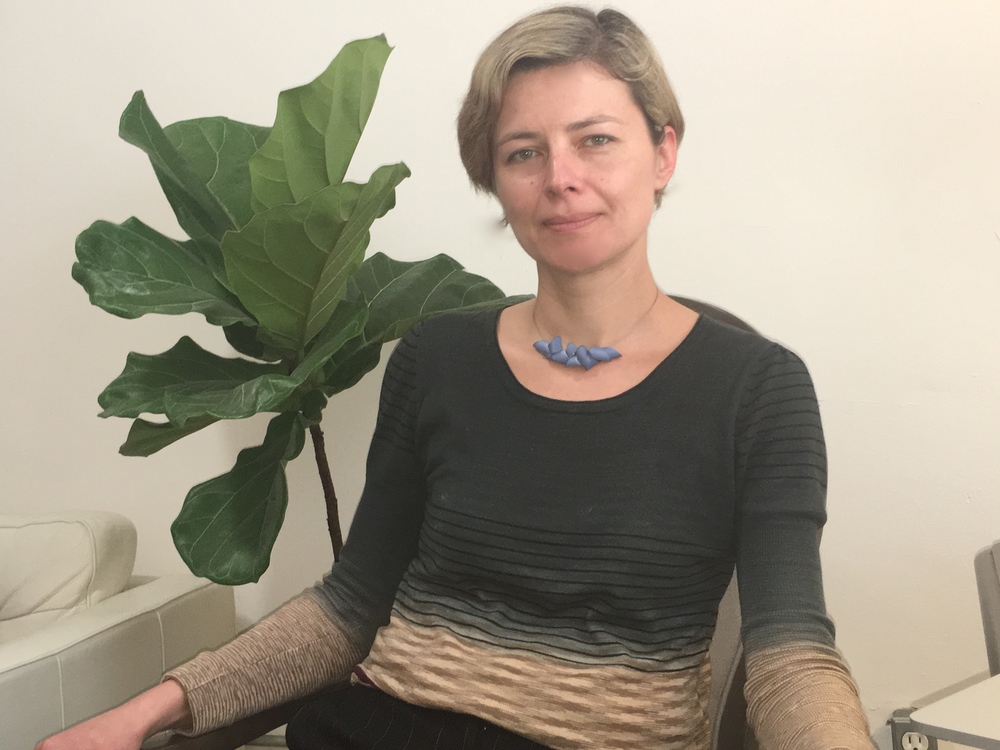
I came to TMS after watching patients
cycle through medications that didn't fit them. My focus is precision, matching the right protocol to the right person, and adjusting as we go.

I help adults and couples build self-awareness and deepen relationships. My work is grounded in Gestalt therapy and informed by EMDR, mindfulness, and transpersonal psychology. I combine deep emotional exploration with practical tools, working in a warm, collaborative space where clients feel genuinely seen and supported.
Everything you need to know before your free consultation.
· 5 min read

· 5 min read

· 5 min read

· 5 min read
· 5 min read
· 5 min read
We proudly serve patients throughout Manhattan and the greater New York area.
Greenwich Village ·
Chelsea · West Village ·
East Village · SoHo ·
Tribeca · Flatiron ·
Midtown
Williamsburg · Brooklyn
Heights · Park Slope ·
Long Island City · Astoria
· Forest Hills
Hoboken · Jersey City ·
Weehawken · Edgewater
· Fort Lee