If your depression has not responded to medication, someone has probably mentioned two names: electroconvulsive therapy (ECT) and transcranial magnetic stimulation (TMS). Both stimulate the brain, both are used when medication and therapy have not been enough, and both get described online in ways that range from miracle cure to horror story. The reality is less dramatic and more useful. TMS vs ECT is not a contest with one winner. It is a trade between strength and tolerability, and the right side of that trade depends on how severe your depression is and how quickly you need relief.
This guide compares TMS vs ECT on the questions patients actually ask: how each one works, how effective each is, what side effects to expect, how long recovery takes, and who each treatment suits best. It draws on published research and on guidance from the National Institute of Mental Health, and it says plainly where ECT has the advantage, because in several places it does. If you want the basics of the magnetic option first, start with our complete guide to TMS therapy.
| What We Know
ECT is still considered the gold standard for severe treatment-resistant depression. A pooled analysis of seven head-to-head trials found remission in about 52 percent of ECT patients versus about 34 percent of patients treated with high-frequency rTMS. TMS requires no anesthesia, does not induce a seizure, and has no known effect on memory. ECT involves general anesthesia and can cause memory loss and confusion that usually improve in the weeks after a course ends. Neither treatment is a one-time fix. ECT usually needs follow-up medication or maintenance sessions to hold the improvement, and TMS patients may return for booster sessions if symptoms re-emerge. |

TMS vs ECT at a glance
ECT is the stronger treatment on average and is reserved for severe or urgent depression. TMS is milder, delivered awake in an outpatient office, and suits patients who have not responded to at least one antidepressant and want to keep working and driving. The table below sets the two side by side.
| TMS therapy | ECT | |
|---|---|---|
| How it works | Magnetic pulses stimulate a targeted brain region, the left prefrontal cortex in depression | Electric current through scalp electrodes induces a brief, controlled seizure |
| Anesthesia | None. You stay awake | General anesthesia plus a muscle relaxant |
| Seizure | Not induced. Rare risk, estimated at about 1 in 1,000 patients | Induced on purpose and lasts under a minute |
| Typical course | About 36 sessions over roughly six weeks, five per week, at Village TMS | Three treatments a week, usually 6 to 12 treatments in total |
| Time per visit | About 20 to 30 minutes in the chair | Brief procedure, then 5 to 10 minutes to wake up and about an hour until fully alert |
| Common side effects | Scalp discomfort, facial twitching, mild headache | Headache, upset stomach, muscle aches, memory loss, confusion |
| Memory | No known effect | Memory loss and disorientation possible, usually improving after the course |
| Recovery | Drive yourself home and go back to your day | Recovery after anesthesia, and most programs expect an escort |
| Effectiveness | Roughly 50 to 60 percent response and 30 to 40 percent remission in treatment-resistant depression | Higher on average, with about 52 percent remission in pooled head-to-head trials |
| Best suited for | Treatment-resistant depression, OCD and anxious depression without urgent risk | Severe, psychotic, catatonic or life-threatening depression |

What is the difference between TMS and ECT?
The main difference is how the brain is stimulated. ECT passes an electric current through the brain under general anesthesia to trigger a brief, controlled seizure. TMS uses magnetic pulses aimed at one specific brain region while you stay awake, and it does not cause a seizure. That single difference drives almost everything else in this comparison.
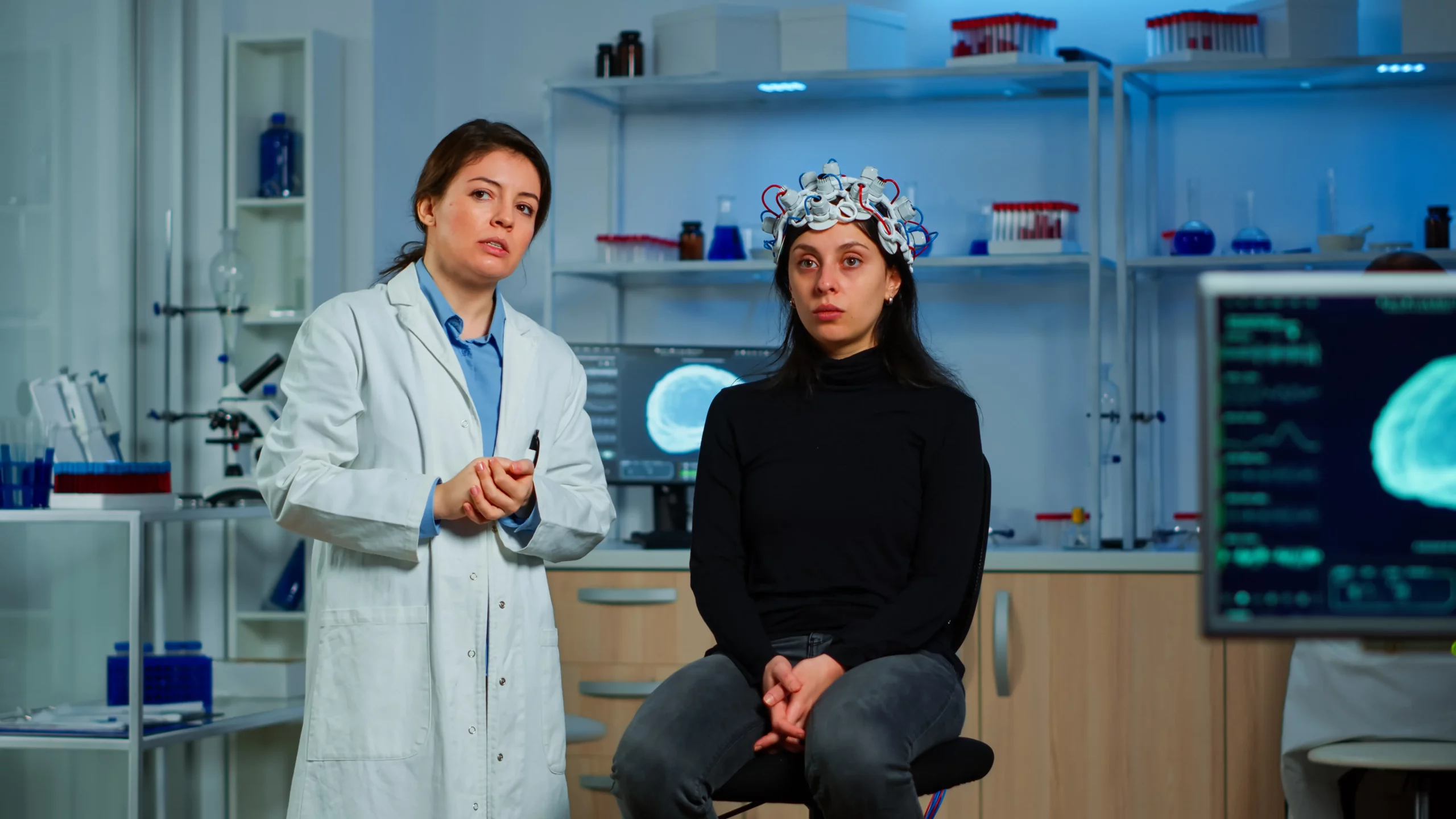
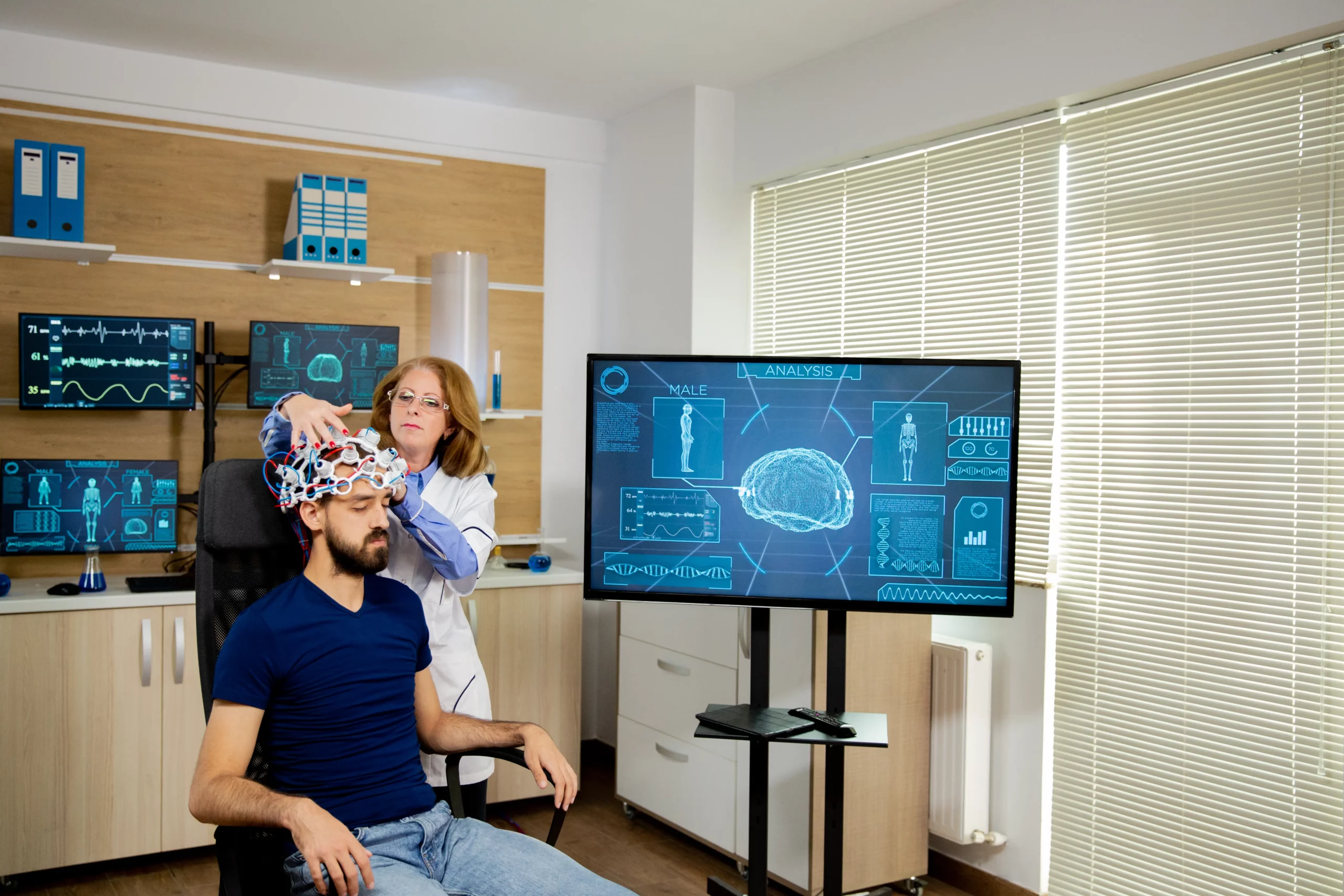
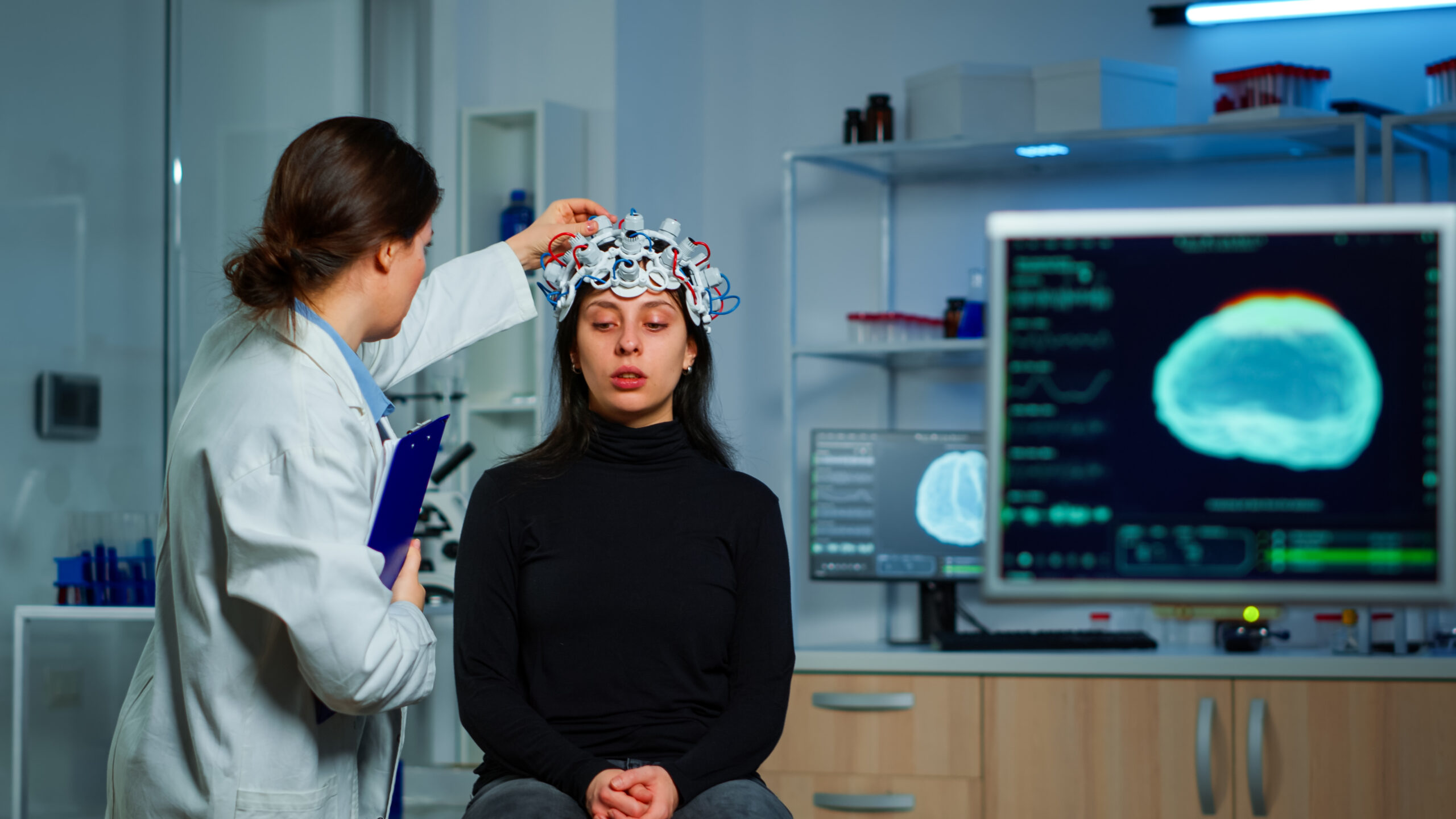
ECT stimulates the brain broadly, which is part of why it is so powerful and part of why it can affect memory. TMS is focused. During a TMS session at Village TMS, a coil rests against the left side of the scalp and delivers magnetic pulses to the region that helps regulate mood, a part of the brain that tends to be underactive in depression. You feel a light tapping, you can read or listen to music, and no sedation is involved. Our walkthrough of how a TMS session works week by week covers the mechanics in more detail.
What does an ECT course involve?
A course of ECT usually means three treatments a week until symptoms improve, most often within 6 to 12 treatments. Before each one you receive a short-acting general anesthetic and a muscle relaxant. A seizure lasting under a minute is induced, you wake within 5 to 10 minutes, and most people are alert again after about an hour, according to the National Institute of Mental Health.
ECT is a hospital or specialty-center procedure that requires an anesthesia team. It tends to work quickly, often within the first week or two, which is one reason it remains the first choice when depression is severe or dangerous. The trade-off is that the improvement does not always last on its own. Follow-up care, such as ongoing antidepressant medication, maintenance ECT sessions or both, is usually needed to keep symptoms from returning.
What does a TMS course involve?
A standard TMS course at Village TMS is about 36 sessions over roughly six weeks, around five sessions per week, each lasting about 20 to 30 minutes. Your first visit includes a one-time calibration step that sets the stimulation intensity for your brain. After each session you stand up and drive yourself home. Most patients notice gradual changes between weeks two and six, as covered in our TMS success rate breakdown.
Schedules can also be shorter. Theta-burst stimulation delivers a similar treatment in sessions that can run under 10 minutes, and accelerated protocols compress the course by delivering several sessions in a day. NIMH notes that accelerated protocols show similar effectiveness to standard rTMS while shortening treatment. Ask your psychiatrist which schedule fits your life and your insurance. You can see how these options fit together on our TMS therapy page.
Which is more effective, TMS or ECT?
On raw effectiveness, the TMS vs ECT question has a clear answer: ECT is more effective on average. A 2013 meta-analysis by Berlim and colleagues pooled seven randomized trials and 294 patients who received either high-frequency rTMS or ECT. About 52 percent of ECT patients reached remission compared with about 34 percent of rTMS patients, a gap that works out to one extra remission for every six patients treated with ECT instead of TMS, as reported in the published analysis.
A 2014 meta-analysis by Ren and colleagues found the same overall gap: ECT outperformed high-frequency rTMS on response, about 64 percent versus 49 percent, and on remission, about 53 percent versus 34 percent. But in a subgroup analysis the advantage of ECT was concentrated in psychotic depression. In non-psychotic depression, high-frequency rTMS performed about as well as ECT. Subgroup findings are less certain than the main result, so treat this as a signal, not a rule. It does help explain why TMS is a reasonable first step for stable, non-psychotic treatment-resistant depression.
That finding fits NIMH’s own description, which calls ECT the gold standard for treatment-resistant depression and states that rTMS does not match its therapeutic effects, while also acknowledging strong clinical evidence that rTMS reduces depressive symptoms. In other words, TMS works well for many people. ECT works better for more people, particularly when depression is severe.
Two cautions keep these numbers in perspective. First, the head-to-head trials are small, were conducted over many years and used older stimulation protocols, so they describe a general pattern rather than a prediction for any one person. Second, the two treatments are usually offered to different patients. People who receive ECT are often more severely ill, while TMS is typically used after one or more medication trials have failed. For TMS on its own terms, published trials report response rates of roughly 50 to 60 percent and remission around 30 to 40 percent in treatment-resistant populations, and our article on what TMS patients actually report compares those figures with real-world experience.
Which has more side effects?
ECT carries more side effects. Its most common ones are headache, upset stomach, muscle aches, memory loss and confusion, plus the usual risks of general anesthesia. TMS side effects are mostly limited to scalp discomfort at the coil site, facial or scalp twitching and mild headache, and they typically ease within the first week or two.
Memory and thinking
Memory is the concern people raise most often about ECT, and it is a legitimate one. NIMH reports that some patients lose memories from around the time of treatment, and the problems are sometimes more severe, though they usually improve over the days and weeks after a course ends. Modern technique reduces the risk. Placing electrodes on one side of the head instead of both, and using ultra-brief electrical pulses, lowers cognitive side effects without making ECT less effective. TMS has no known effect on memory, which is a major reason patients who are not in urgent need choose it first.
Seizure risk
ECT induces a seizure on purpose, under anesthesia and monitoring. TMS does not induce one. A seizure during TMS is possible but rare, estimated at about 1 in 1,000 patients under standard clinical protocols, and almost every documented case involves a known risk factor such as a seizure history, recent brain injury or heavy alcohol use. That is why screening before treatment matters. TMS is not appropriate for people with certain metal implants near the head or a history of seizures, and our team reviews your medical history before the first session.
How long is recovery after TMS vs ECT?
Recovery after TMS is essentially zero. There is no anesthesia, so most patients drive themselves home and return to work the same day. Recovery after ECT takes longer. Most people are groggy for the first stretch after waking and fully alert after about an hour, and because anesthesia is involved, programs generally expect someone to accompany you.
The larger difference is in the days around treatment. ECT patients may notice headaches, muscle aches or confusion on treatment days and sometimes have difficulty with recent memories during the course. TMS patients mostly describe a mild ache on the scalp that fades after the first week or two. For someone who works, parents or cares for family members, that difference in disruption often decides the question.
Do the results last?
Neither treatment is a cure, and both can need follow-up to hold the improvement. NIMH notes that ECT usually requires follow-up treatment, either medication, maintenance ECT or both, to sustain improvement and reduce the chance symptoms return. After TMS, many patients stay well for an extended period and return for periodic maintenance or a booster course if symptoms start to re-emerge.
The practical takeaway is that treatment planning matters as much as the treatment itself. A good plan for either option includes what happens after the first course ends, whether that is medication, psychotherapy, scheduled boosters or a different treatment altogether.
When is ECT the better choice?
ECT is the better choice when depression is severe, psychotic or dangerous, and when a rapid response matters more than convenience. NIMH identifies two situations: severe treatment-resistant depression, and circumstances where a quick response is essential, such as catatonia, active suicidality or malnutrition. ECT is also used in some cases of treatment-resistant bipolar disorder. Our page on bipolar disorder treatment in NYC explains the options we offer for mood-stabilizing care.
Village TMS provides TMS, Spravato and ketamine-based care, and it does not provide ECT. If your psychiatrist believes ECT is the right level of care, we will say so directly and help you get to the right place rather than steering you toward an option that is too gentle for the situation.
If you or someone you know is in crisis or having thoughts of suicide, do not wait for an appointment. Call or text 988, the Suicide and Crisis Lifeline, or call 911 in a life-threatening emergency.
When is TMS the better choice?
TMS is the better choice when you have not improved on at least one antidepressant, your depression is not an immediate danger, and you want a treatment with no anesthesia, no seizure and no memory risk. It is FDA-cleared for treatment-resistant depression, OCD and anxious depression, among other conditions. Our page on treatment-resistant depression explains how that diagnosis is made and what the full set of options looks like.
Cost is a common concern, and it usually favors TMS. Village TMS is in network with Aetna, BCBS, Cigna, United, Empire BCBS, Oxford and Medicare, verifies coverage for free, and most insured patients pay $0 to $50 per session. Details are on our TMS therapy cost page.
Can you try TMS first and still have ECT later?
Yes. In the ECT vs TMS sequence, trying TMS does not close the door on ECT, and for patients who are stable enough to wait, starting with the gentler option is a reasonable sequence. If a TMS course does not produce enough improvement, ECT remains available, and the reverse is also true for patients who cannot tolerate ECT or whose improvement did not last.
TMS and ECT are also not the only choices. Spravato, the FDA-approved esketamine nasal spray, is an in-clinic option for treatment-resistant depression, and you can read what patients report in our Spravato reviews or see how it works on our Spravato NYC page. Ketamine is another route, with its own screening requirements covered in who is not a good candidate for ketamine therapy, and our ketamine therapy overview and ketamine-assisted psychotherapy program describe how it is delivered.
How do you decide between TMS and ECT?
The decision rests on a handful of questions that a psychiatrist can help you answer. Bring these to your consultation:
- How severe is my depression right now, and is there any immediate safety concern?
- Which medications have I tried, at what doses and for how long?
- Do I have psychotic symptoms, bipolar disorder or a history of seizures that change which option is safe?
- How much disruption can my work and family life absorb during treatment?
- What is the plan for keeping the improvement after the first course ends?
If those answers point toward a stable, treatment-resistant depression where you want to keep your routine, a TMS evaluation is a sensible next step. If they point toward severe or urgent illness, an ECT evaluation at a hospital program is the safer route. Either way, the first step is a careful psychiatric evaluation rather than a guess.
Talk to a psychiatrist about your options
Village TMS is a Manhattan psychiatric practice led by board-certified psychiatrists. We offer a free consultation to review your history, answer your questions and verify your insurance, and you can also find a TMS provider near you or explore our broader mental health support in NYC. Referring clinicians can use our provider referral page.
Call 646-817-2835 or contact us to book a free consultation.