Spravato (esketamine) nasal spray is one of the few advanced depression treatments that insurance routinely covers, and it is also one of the easiest to get a confusing bill for. The medication has a price. The two hours of required monitoring have a price. The clinic visit has a price. Add a deductible, a coinsurance rate and a prior authorization, and the number you see on the first estimate often bears little resemblance to what you end up paying. Here is how the pieces fit together, so you can ask the right questions before your first dose.
This guide breaks down what Spravato costs with and without insurance, how the treatment schedule shapes your budget, what manufacturer savings programs can do, and how to lower your out-of-pocket cost. For the treatment itself, see our Spravato NYC page, and for what patients report after treatment, see Spravato reviews.
| What We Know
Spravato’s cost has three parts: the medication, the in-clinic observation that federal safety rules require for at least two hours after every dose, and the clinic visit itself. Depending on the plan, these can be billed separately or combined into one bundled code, which is why estimates differ. The FDA-labeled schedule front-loads the cost. Treatment begins with twice-weekly sessions for four weeks, then weekly sessions for four weeks, then weekly or every-other-week sessions, so the first two months involve the most visits. Eligible commercially insured patients may pay as little as $10 per treatment for the medication through the SPRAVATO withMe Savings Program, and an observation rebate program can offset monitoring costs. Both programs are limited and are for commercial insurance, so ask about your plan. |
How much does Spravato cost?
Without insurance, Spravato is expensive. The medication is priced by the milligram, and clinic fees for administration and two hours of monitoring are added on top, so a first month of about eight sessions adds up quickly. With coverage, most patients pay a copay or coinsurance per session instead. Because list prices, negotiated rates and clinic fees all differ, ask for a written estimate rather than relying on figures you find online.
Published price estimates vary widely because list price, negotiated rates and clinic fees are all different numbers. A single dose is also made up of two or three 28 mg devices depending on whether the prescribed dose is 56 mg or 84 mg, so the price changes with the dose your psychiatrist chooses. The most reliable number is the one produced by a benefits check on your own plan, which is why Village TMS verifies coverage for free before treatment begins.
What are you paying for with Spravato?
A Spravato bill usually has three components, and understanding them explains most of the surprises:
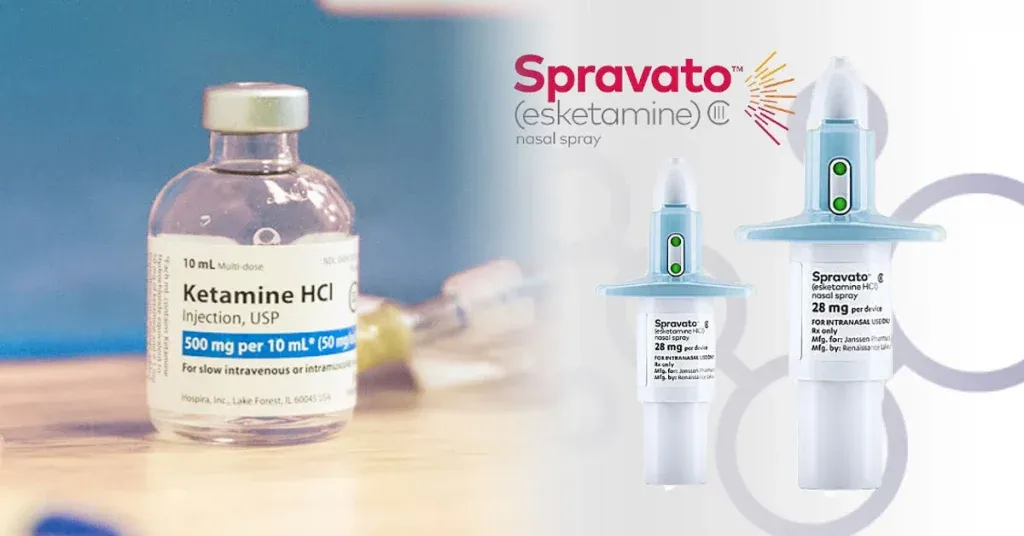
- The medication. Spravato is an esketamine nasal spray supplied in 28 mg devices. A 56 mg dose uses two devices and an 84 mg dose uses three. When a plan pays for the drug separately, it is billed per milligram under its drug code, J0013, which replaced the older S0013 code on January 1, 2026.
- The observation period. The FDA label requires that patients be monitored by a healthcare provider for at least two hours at every treatment session, followed by an assessment before leaving. That clinician time is billed as a service.
- The visit and administration. The certified treatment center prepares the dose, checks vital signs and supervises self-administration, and may bill a visit or facility charge.
These requirements exist because Spravato is available only through a restricted safety program known as a REMS and can cause sedation, dissociation and blood pressure increases. The FDA prescribing information explains the monitoring requirement in full.
How many Spravato sessions will you need, and what does that mean for cost?
For treatment-resistant depression, the labeled schedule begins with two sessions a week for the first four weeks, which is eight sessions. Weeks five through eight move to one session a week, and from week nine the schedule is individualized to the least frequent dosing that maintains your response, either weekly or every other week, per the FDA label. Your psychiatrist sets the plan for you based on your response. A different labeled schedule applies when Spravato is used for depressive symptoms with acute suicidal thoughts or behavior, so the session counts below assume treatment-resistant depression.
For budgeting, that schedule translates to:
- Month one: about eight sessions
- Month two: about four sessions
- Month three and beyond: two to four sessions per month, depending on whether you stay on every-other-week or weekly dosing
Multiply your per-session cost by those counts to estimate each month. The first two months are the most expensive, so if you are planning around a deductible, expect it to be consumed early and your cost to fall afterward.

Does insurance cover Spravato?
Yes, for many patients. Spravato is FDA-approved for treatment-resistant depression and is given in a certified clinic, which is why, as our Spravato NYC page notes, it is more often covered than IV or IM ketamine. Coverage still depends on your plan and requires prior authorization.
Insurers usually ask for documentation that you have treatment-resistant depression, meaning you did not improve enough on multiple antidepressants. One published pharmacy policy, for example, asks for an inadequate response to the maximum tolerated dose of two antidepressants in the current episode and requires at least a 50 percent symptom reduction on a standard rating scale to continue treatment. Your plan’s criteria may differ, but the pattern of documenting prior medications and tracking progress with rating scales is consistent.
One recent change matters for coverage. In January 2025, the FDA approved Spravato as a monotherapy for treatment-resistant depression, meaning it can be prescribed on its own rather than only alongside an oral antidepressant. Some insurance policies have not caught up and still require a current oral antidepressant, so check your plan’s latest criteria before treatment starts.
For Spravato, Village TMS is in network with Aetna, Cigna, Optum and TRICARE East (Humana Military). We handle prior authorization, and verifies your coverage for free. Our team can also estimate your out-of-pocket cost, including your deductible and coinsurance, before treatment begins. Village TMS does not currently bill Medicare or Medicaid for Spravato. If your commercial plan is not on this list, we can ask your insurer for a single case agreement, an individual arrangement that lets your plan cover your treatment with us on agreed terms. Approval is the insurer’s decision, so we will tell you the outcome before you start.
Does Medicare cover Spravato?
Village TMS does not currently bill Medicare for Spravato, but Medicare patients often ask how it works. Medicare generally pays for Spravato through two bundled codes, G2082 for doses up to 56 mg and G2083 for doses above 56 mg, and each one covers both the medication and the two-hour observation. That means a Medicare claim does not show the separate drug, monitoring and visit charges described above. Some commercial plans use the same bundled codes, while others bill the drug, observation and visit separately, so the structure of your bill depends on your plan. Cost sharing and whether a given clinic bills Medicare for Spravato vary, so ask any treatment center before you start.

What savings programs can lower the cost of Spravato?
The manufacturer offers two programs for eligible commercially insured patients, described on the official Spravato patient support page. The SPRAVATO withMe Savings Program allows eligible patients to pay as little as $10 per treatment for the medication, with quantity limits and an annual maximum. The SPRAVATO withMe Observation Rebate Program allows eligible patients to pay as little as $0 after rebate for the observation period, with a yearly limit and some state exclusions.
Three details matter:
- The savings program covers the medication, not the observation or visit charges, which is why a separate rebate program exists.
- You must enroll in the program before your treatment to receive savings, and the benefits are for commercial or private insurance. Programs like these are generally not available to patients with Medicare, Medicaid or other government coverage, so confirm eligibility on the program page.
- The manufacturer’s patient support program, which provides a care navigator and help understanding coverage, is open to everyone taking Spravato regardless of insurance type.
Village TMS does not currently accept Medicaid, and does not bill Medicare for Spravato. If you have no insurance, ask our team about self-pay options. Program terms change, so verify current details when you enroll.
How does the cost of Spravato compare with IV ketamine and TMS?
Spravato is usually the more insurance-friendly option compared with ketamine. IV and IM ketamine are used off-label for depression and are frequently self-pay, while Spravato is FDA-approved and more often covered, as our guide to ketamine insurance coverage explains. Our Spravato vs IV ketamine comparison goes through how the two differ on effects, convenience and cost, and our ketamine therapy page describes the off-label options.
TMS has a different cost structure. It is delivered over a multi-week course of brief visits with no medication, and Village TMS reports that most insured patients pay $0 to $50 per session, as covered on our TMS therapy cost page. Neither is automatically better. Your psychiatrist can explain which fits your history, and our page on treatment-resistant depression lays out how we match patients to treatments.
What does prior authorization for Spravato involve?
Prior authorization means your insurer must approve Spravato before your first dose. Your psychiatrist submits your diagnosis, your medication history and the treatment plan, and the insurer reviews them against its criteria. Approvals are usually granted for a set period, so expect a second review to continue treatment.
Continuation is where many patients are surprised. In the published pharmacy policy mentioned above, continued approval depends on at least a 50 percent reduction in depressive symptoms from baseline on a standard rating scale, which is why clinics track your scores at each stage. The full policy document shows how a payer words those requirements, and your own plan’s version will be similar in structure even if the details differ.

What happens to your cost after the first two months?
Your cost typically falls after the first two months because the visit schedule thins out. The FDA label directs that dosing frequency be individualized to the least frequent dosing that maintains your response, so many patients move to every-other-week sessions while others stay on weekly dosing. Your deductible has usually been met by then, which lowers your per-session share, although coinsurance still applies.
Plan for the long term as well as the first month. Ask your clinic how often most patients need maintenance sessions, how your insurer handles reauthorization and what your annual out-of-pocket maximum is, because treatment can continue for months or longer if it is working.
What if your plan denies Spravato?
A denial is not necessarily the end of the road. Insurers deny Spravato most often because the record does not show enough documented antidepressant trials, because the diagnosis or severity is unclear, or because a rating scale is missing. Since the 2025 monotherapy approval, another common issue is a plan that still requires a concurrent oral antidepressant, which your psychiatrist can address with updated documentation or an appeal. Your clinic can submit additional documentation, request a peer-to-peer conversation with the insurer’s reviewer and file a formal appeal.
If Spravato remains out of reach, other evidence-based options exist. TMS is delivered over a multi-week course with no medication, and our guide to TMS insurance coverage explains how its criteria differ. A psychiatrist can help you weigh the alternatives.
What should you ask our billing team before starting?
- Is my plan in network with your clinic for Spravato, and is prior authorization required?
- What are my deductible, copay and coinsurance for Spravato, and how much of my deductible has been met?
- Are the medication, the observation period and the visit billed separately, and what will each cost me?
- Am I eligible for the Spravato withMe savings and observation rebate programs, and how do I enroll before my first dose?
- How many sessions will the approval cover, and what is the plan for reauthorization?
Getting these answers in writing before treatment starts is the single best protection against an unexpected bill.

What other costs should you plan for?
Beyond the bill, plan for transportation and time. You cannot drive for the rest of the day after each dose, so you need a ride home, and each visit takes at least two hours of monitoring plus preparation. During the first month that means eight visits, which can mean time off work or arranging care for family members.
Some patients also pair Spravato with psychotherapy or integration support. Ask about the cost of any added sessions upfront so the full plan is clear.
How can you lower your Spravato cost?
- Ask for a benefits check and a written estimate of your deductible, copay or coinsurance before your first dose
- Enroll in the manufacturer’s savings and observation rebate programs before treatment if you are commercially insured
- Ask your clinic how prior authorization is handled and how many sessions the approval covers
- Plan your treatment start date around your deductible and out-of-pocket maximum if you have flexibility
- Confirm whether your plan requires a specific certified treatment center or has a preferred one
If you are not sure Spravato is the right fit, our article on who is not a good candidate for ketamine therapy explains the medical screening that applies to esketamine and ketamine alike.
Call 646-817-2835 or contact us to book a free consultation.