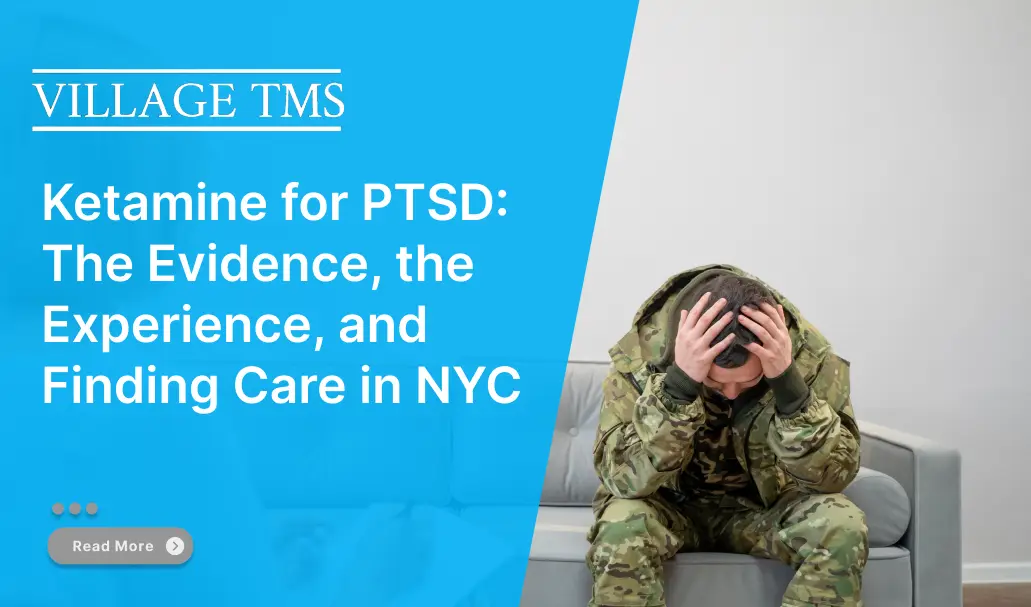
If you are living with PTSD that has not eased with therapy and medication, you may be wondering whether ketamine could help. Here is the honest answer: a growing body of research shows ketamine can produce meaningful, rapid reductions in PTSD symptoms for many patients, particularly those with chronic PTSD that has resisted standard treatment. The strongest results come from a full course of infusions, often paired with trauma-focused therapy. This guide walks through the evidence, what ketamine for PTSD treatment actually involves, who it tends to help, and how to find trauma-informed care in NYC.
| What we know
1. Research shows ketamine can produce rapid reductions in PTSD symptoms, including intrusive memories, hyperarousal, and avoidance, for many patients with chronic PTSD. 2. The strongest results come from a course of repeated infusions rather than a single dose, and effects are often enhanced when ketamine is paired with trauma-focused psychotherapy. 3. Ketamine for PTSD is an off-label use. A thorough psychiatric evaluation by a trauma-informed clinician is essential to confirm it is appropriate and safe. |

Can Ketamine Treat PTSD?
Post-traumatic stress disorder is a serious condition that develops after exposure to trauma. It can involve intrusive memories, flashbacks, hypervigilance, emotional numbing, and avoidance of anything that recalls the trauma. Standard treatments, including trauma-focused therapy and certain medications, help many people, but a significant share of patients do not get adequate relief.
For those patients, ketamine has emerged as a treatment worth serious consideration. It is not a first-line PTSD treatment, and it is not a replacement for trauma-focused therapy. But for chronic, treatment-resistant PTSD, the research increasingly supports ketamine as a rapid-acting option that can reduce symptoms and, for some patients, make trauma-focused therapy more accessible.
What the Research Shows About Ketamine for PTSD
The evidence for ketamine PTSD treatment has grown substantially. Systematic reviews of randomized controlled trials report that intravenous ketamine can meaningfully improve PTSD symptoms, with multi-infusion schedules achieving greater results than single doses. A randomized controlled trial of repeated ketamine infusions found significant reductions in symptoms such as flashbacks, avoidance, and negative mood in people with chronic PTSD. Research has also examined ketamine combined with psychotherapy, with early meta-analysis suggesting the combination may be particularly effective. Ketamine for PTSD remains an off-label use, and the evidence is still developing, but the direction is consistent. You can read general background on PTSD and its treatment through the National Institute of Mental Health.
One nuance worth knowing: research suggests ketamine appears more helpful for chronic PTSD, the kind that has lingered for months or years, than for very recent trauma. This is part of why a careful psychiatric evaluation matters before treatment.
How Ketamine Works for PTSD
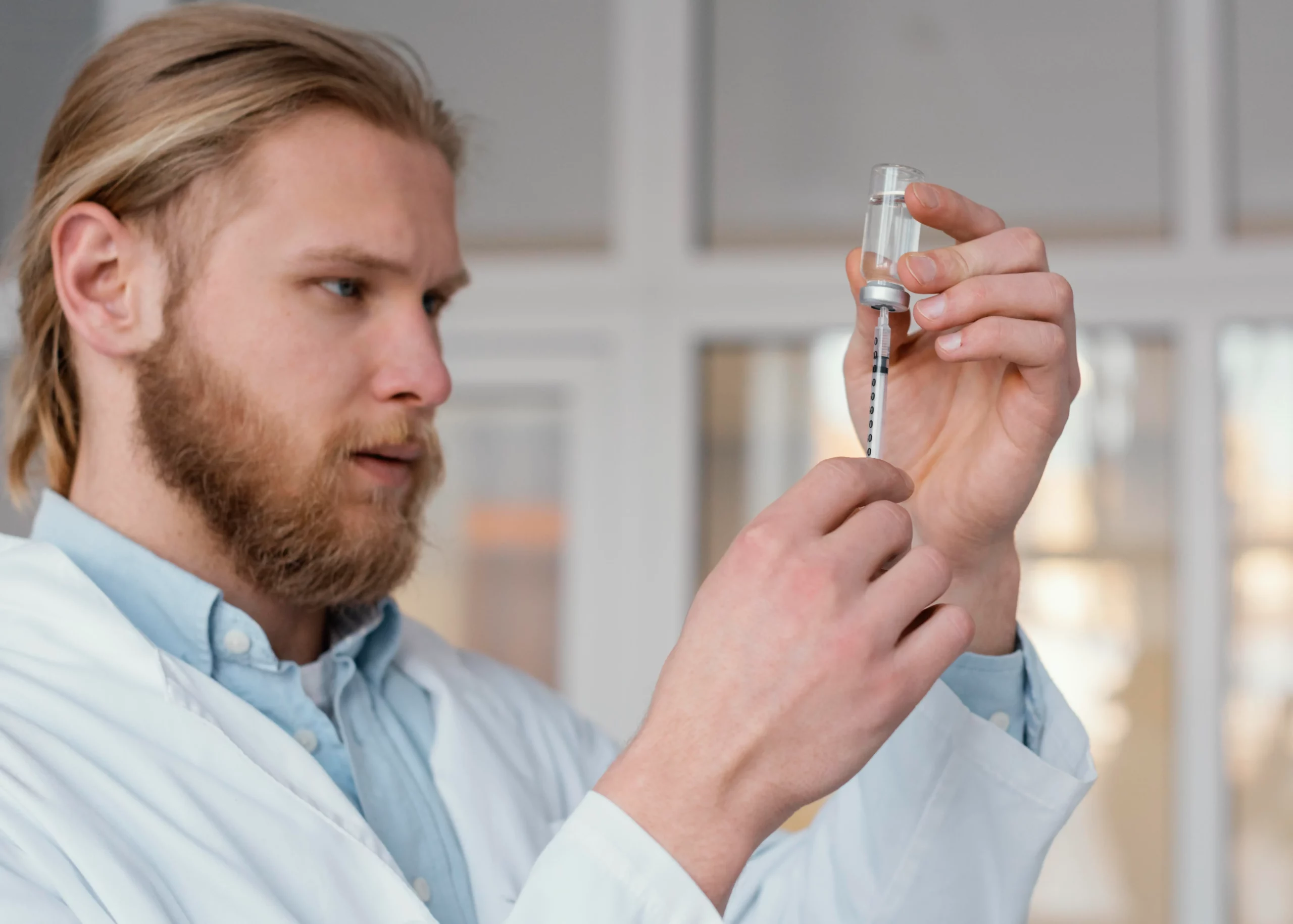
Ketamine is an NMDA receptor antagonist that modulates glutamate, the brain’s most abundant excitatory neurotransmitter, and promotes neuroplasticity, the brain’s ability to form new connections.
For PTSD specifically, researchers believe ketamine may work in part by supporting the brain’s ability to process and extinguish traumatic memories. Trauma can lock memories in with their original emotional intensity, so that ordinary cues trigger intense fear responses. By promoting neuroplasticity, ketamine appears to help loosen these patterns, particularly when treatment is paired with trauma-focused therapy during the window when the brain is most adaptable. Brain imaging research has linked ketamine’s effect in PTSD to changes in how the prefrontal cortex regulates the amygdala, the brain’s fear center.
What Ketamine for PTSD Treatment Involves
Ketamine PTSD treatment follows a structured course. It begins with a thorough psychiatric consultation with a trauma-informed clinician, reviewing your trauma history, current symptoms, medications, and goals. This evaluation is especially important for PTSD, because the timing and nature of trauma affect whether and how ketamine is likely to help.
Treatment is typically delivered as a series of infusions over one to a few weeks, since multi-infusion schedules produce stronger results than single doses. During an IV session, which lasts 40 to 60 minutes with continuous monitoring, you may experience mild dissociation that resolves as the medication wears off. Many patients benefit most when ketamine is paired with trauma-focused psychotherapy, sometimes called ketamine-assisted therapy, which uses the period of heightened neuroplasticity after a session to support trauma processing.

Who Is a Good Candidate for Ketamine PTSD Treatment?
Ketamine for PTSD is generally considered when:
- You have a diagnosis of PTSD, particularly chronic PTSD that has persisted despite trauma-focused therapy and medication.
- Your symptoms significantly affect your daily life, relationships, sleep, or ability to work.
- You are open to combining ketamine with trauma-focused psychotherapy for the strongest results.
- You have been screened and cleared for the conditions that make ketamine less appropriate, including uncontrolled high blood pressure, certain cardiac conditions, a history of psychosis, and active substance use.
PTSD frequently occurs alongside depression and anxiety, and ketamine’s effect across all three is one reason it can be valuable for patients carrying more than one condition. A trauma-informed psychiatric evaluation determines whether ketamine fits your specific situation.
Finding Trauma-Informed Ketamine Care in NYC
PTSD treatment requires a clinic that understands trauma, not just one that administers ketamine. When evaluating NYC clinics, look for board-certified psychiatric supervision, a genuinely trauma-informed approach, and integration therapy built into the program. Our guide to what sets a great ketamine clinic apart covers the questions worth asking. For PTSD specifically, ask how the clinic combines ketamine with trauma-focused therapy and who provides that therapeutic support.
Take the First Step at Village TMS
If PTSD has not eased with standard treatment, ketamine may be worth exploring. At Village TMS in Manhattan, care is led by Dr. Yuli Fradkin, MD, a psychiatrist with more than 25 years of experience and academic appointments at Beth Israel, Tufts, Yale, and Rutgers, alongside Dr. Elena Bruck, MD. We provide trauma-informed psychiatric screening, integration therapy, and IV, IM, and Spravato treatment formats. Call 646-817-2835 or contact us to book a free consultation.