If you are looking into ketamine therapy costs in NYC,...
Read More
If you are looking into ketamine therapy costs in NYC, the first thing most people want to know is the price. Here is the direct answer: a single IV ketamine infusion at Village TMS typically costs between $400 and $800, depending on dose and session structure. A full induction course of six infusions, the standard starting protocol, runs roughly $2,400 to $4,800 before any insurance offsets. Spravato, the FDA-approved esketamine nasal spray, is often covered by major insurers and can cost a fraction of that out-of-pocket. The rest of this guide breaks down why prices vary, what is and is not included in a typical quote, and how to plan for a full course of treatment.
In New York City, a single IV ketamine infusion generally falls between $400 and $800 per session at clinics that publish their pricing. Some clinics charge significantly more, particularly those that bundle integration therapy, lab work, or psychiatric evaluation into a single per-session price. A handful of high-end providers in Manhattan charge well above $1,000 per session, but those are outliers, not the median.
At Village TMS, our IV ketamine infusions sit in the $400 to $800 range, depending on the dose required and the format of your session. We publish our range on our insurance page so patients can see it before they call. There are no hidden charges layered on top, and we walk through the full cost structure during your free consultation, before you commit to any treatment.
A few factors influence where in that range your specific session lands:
Ketamine therapy is not a single-session treatment. The clinical evidence is strongest for a full induction course, which is typically six infusions delivered over two to three weeks. A single infusion can produce a noticeable shift, but the effects are most likely to last when treatment is delivered as a series.
If you do the math at our published per-session range, a full induction course at Village TMS runs roughly $2,400 to $4,800 before any insurance reimbursement. After the initial course, many patients move to maintenance infusions, scheduled every four to eight weeks based on how their symptoms track. A booster session is priced at the same per-session rate as the initial course.
It is worth comparing that figure against the cost of years of medication trials, repeated psychiatrist visits, and missed work. For patients who have spent significant time on antidepressants without finding the right one, the upfront cost of a ketamine course can be lower than the long-term cost of poorly managed depression. That is not the only reason to choose ketamine, but it is a fair comparison to make.
Ketamine therapy costs more in New York City than in smaller markets. The reasons are practical, not promotional: clinical real estate in Manhattan is expensive, regulatory requirements for ketamine clinics are strict, and most NYC clinics staff dedicated medical providers rather than rotating technicians.
National averages for IV ketamine sit between roughly $300 and $1,000 per session, with the median closer to $500. NYC clinics tend to land at the higher end of that range, which reflects both the cost of operating a properly staffed clinic in Manhattan and, in many cases, more clinical oversight per session. A $300 session in a smaller market and an $800 session in NYC are not always equivalent in terms of what is actually included.
That said, you should not assume a higher price means better care. The strongest signals of quality are physician supervision during sessions, transparent pricing, and clinical credentials, not the per-session number itself.
Village TMS is one of the few NYC clinics that offers all three ketamine formats. Because ketamine therapy cost varies meaningfully across them, it is worth understanding what each option involves before you choose.
IV is the format with the longest clinical track record and the most precise dose control. The infusion typically runs 40 to 60 minutes, with monitoring of heart rate and blood pressure throughout. IV is generally the right starting point for severe or treatment-resistant depression.
IM injections take less time per session and require less infrastructure, so they tend to be priced below IV. The clinical effect is similar, though dose control is less precise. IM is often the right choice for patients on a tight budget or for maintenance dosing between IV sessions. It pairs particularly well with ketamine-assisted therapy, where the ability to combine the dose with structured psychotherapy is valuable.
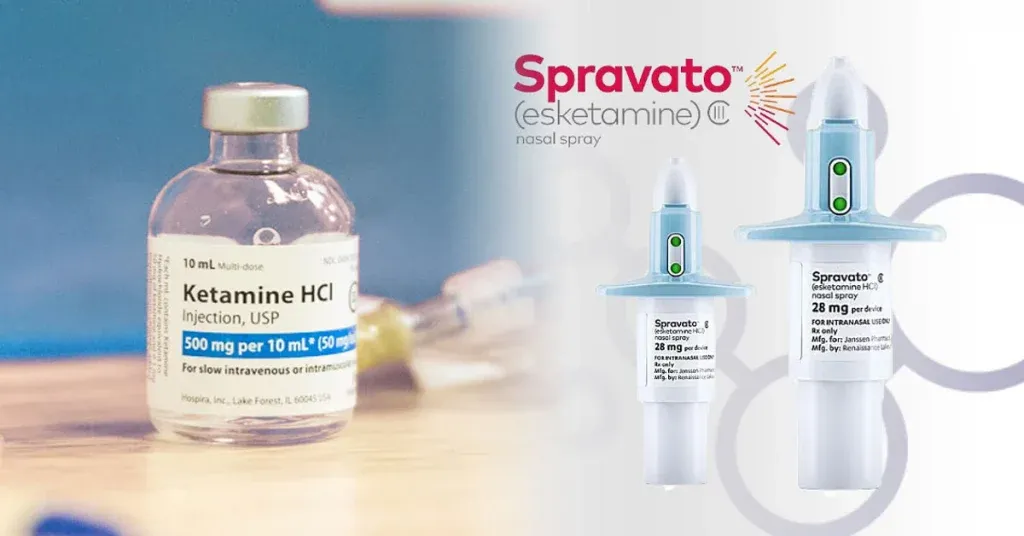
Spravato is the FDA-approved form of ketamine for treatment-resistant depression. Because it has FDA approval, it is the only ketamine format that major insurers consistently cover. Out-of-pocket cost can range from a co-pay to several hundred dollars per session depending on your plan, but for many patients with insurance, Spravato is the most affordable path to ketamine therapy. Sessions take place in our office under medical supervision, including a two-hour observation period after dosing. You can read more on our Spravato page.
This is where ketamine therapy costs gets confusing for most patients. A clinic may quote a low per-session price, only for the total cost of a full course to come in significantly higher once everything is added up. The questions below will help you compare clinics on equal footing.
Ask any clinic whether the per-session price includes:
At Village TMS, we walk through every line of your expected cost during your free consultation. Patients should leave that conversation with a complete number, not a range. If a clinic cannot give you a clear total before you book, that is a signal to ask harder questions.
In the past few years, several telehealth companies have started offering at-home ketamine in the form of oral lozenges, with sessions supervised remotely by a clinician. The advertised price is significantly lower, often $200 to $400 per month for a subscription that covers multiple doses, and the appeal is obvious for cost-conscious patients.
There are real trade-offs to weigh. Oral ketamine has the lowest bioavailability of any format, meaning a smaller portion of each dose actually reaches the brain. Effects are typically less pronounced and less consistent than IV. Supervision is remote, which means there is no clinician in the room if something goes wrong. For patients with severe symptoms, suicidal ideation, complex psychiatric history, or high cardiovascular risk, at-home ketamine is not appropriate.
For patients with milder symptoms who have already responded well to ketamine in a clinical setting, at-home options can be a reasonable maintenance choice. For most people starting ketamine therapy, in-clinic care with proper monitoring is the safer first step. The price difference reflects that difference in clinical infrastructure.
Even within Manhattan, you will see ketamine pricing range from a few hundred dollars to well over a thousand per session. The variance is real and worth understanding. The biggest drivers are:
The price you pay should reflect the clinical infrastructure, not the brand. When evaluating clinics, ask who delivers your session, what is monitored during treatment, and what specifically is included in the per-session price.
Insurance coverage for ketamine therapy costs depends almost entirely on which format you receive. Spravato has FDA approval for treatment-resistant depression and is covered by most major insurance plans, including United Healthcare and Blue Shield. IV and IM ketamine are still considered off-label for mental health, which means most insurers will not cover them in-network, though some patients receive partial reimbursement through out-of-network benefits. Our team verifies your specific benefits before your first session and helps with any prior authorization paperwork. You can read a full breakdown on our ketamine insurance page.
If you are uninsured or your plan does not cover ketamine, two options often help: HSA and FSA accounts can typically be used toward ketamine therapy, and some patients qualify for medical financing through programs like CareCredit. We discuss all available options during your consultation.
There is no single right way to fund a course of ketamine therapy. The right path depends on your insurance, your savings, and how you weigh upfront cost against long-term outcomes. The most common approaches we see are:
The honest framing: cost should never be the only factor in choosing a treatment, but it should not be hidden either. We aim to make pricing the clearest part of your decision, not the most stressful.
At Village TMS, our approach to pricing is built around three principles: transparency, benefits verification before any commitment, and matching format to need. We publish our per-session range so you know what to expect before you call. We verify your insurance benefits and walk through the full expected cost during your consultation. And because we offer IV, IM, and Spravato in the same clinic, we can match the format to your condition, your insurance situation, and your budget without a separate referral.
Treatment is delivered by Dr. Yuli Fradkin, MD, who has more than 25 years of psychiatric experience and academic posts at Beth Israel, Tufts, Yale, and Rutgers, alongside Dr. Elena Bruck, MD, who brings nearly twenty years of clinical practice in Vienna and New York. The clinic is at 80 5th Avenue, Office 1405, in Manhattan.
The fastest way to know what ketamine therapy will actually cost for you is a free consultation. We will review your insurance, your treatment history, and the format that fits your situation, and you will leave with a specific number, not a range.


Take this next step, we’ll help with the others.
For patients who have not responded to two or more antidepressants, the clinical evidence for ketamine is strong, and the speed of relief is often dramatic. The cost is significant, but it should be weighed against the cost of years of medication trials, missed work, and ongoing depression. That said, ketamine is not the right treatment for everyone, and a consultation is the only way to know whether it makes sense for you.
IV ketamine for mental health is considered off-label, meaning the FDA has not approved ketamine specifically for depression or anxiety. Insurance plans typically only cover FDA-approved indications, which is why Spravato (esketamine), the FDA-approved form, is more often covered. Coverage for IV ketamine is slowly expanding, but it remains the exception rather than the rule.
In most cases, yes. Ketamine therapy delivered by a licensed medical provider typically qualifies as a medical expense for HSA and FSA purposes. We recommend confirming with your account administrator before treatment, but the answer is usually straightforward.
Some patients see meaningful improvement after one or two infusions, though the clinical evidence is strongest for a full course of six. We discuss your options openly and never recommend more sessions than the clinical picture supports. If cost is a real constraint, Spravato (when covered by insurance) and IM ketamine are usually more affordable starting points.
Yes. We discuss financing options during your consultation, including third-party medical financing programs that allow you to spread the cost of a full course across monthly payments. We also help patients submit claims for out-of-network reimbursement where applicable.
We use cookies to improve your experience on our site. By using our site, you consent to cookies.
Manage your cookie preferences below:
Essential cookies enable basic functions and are necessary for the proper function of the website.
These cookies are needed for adding comments on this website.
Google reCAPTCHA helps protect websites from spam and abuse by verifying user interactions through challenges.
Google Tag Manager simplifies the management of marketing tags on your website without code changes.
You can find more information in our Cookie Policy and Privacy Policy.