Village TMS provides ketamine therapy in Manhattan from a single...
Read More
Village TMS provides ketamine therapy in Manhattan from a single clinic at 80 5th Avenue in the Flatiron district of Manhattan, serving patients across all five boroughs and northern New Jersey. Treatment is led by board-certified psychiatrists with academic appointments at Mount Sinai Beth Israel, Tufts, Yale, and Rutgers, not rotating technicians, and includes IV ketamine infusion, FDA-approved Spravato nasal spray, and intramuscular (IM) injection under continuous medical supervision. If you have been searching for ketamine therapy Manhattan, here is what the clinic offers, who the patients are, and how to get there from wherever you live in the metro area.
Our office is at 80 5th Avenue, Office 1405, on the corner of 5th Avenue and 14th Street. The building sits at the southern edge of the Flatiron district, between Union Square and Greenwich Village, with the Flatiron Building itself a few blocks north and Washington Square Park a short walk south.
Location affects the recovery experience. We chose a quiet professional building over a high-volume medical complex to ensure a neutral, calm environment for the post-session window. The treatment rooms are private, the recovery space is calm, and the waiting area is not a hospital lobby. Patients describe the visit as feeling closer to a private psychiatric appointment than a clinical procedure.
If you are taking the subway, the clinic is steps from the L, N, Q, R, W, 4, 5, and 6 lines at Union Square, and a short walk from the F and M at 14th Street. By car, the building has limited street parking nearby and several commercial garages within two blocks. Most patients in the city find the office easier to reach than they expect.
We see patients from across the metro area, not just Manhattan. The Flatiron location is central enough that patients from the outer boroughs and northern New Jersey can reach us in 30 to 45 minutes by subway, train, or rideshare. The specific neighborhoods we regularly see patients from include:
Union Square, Chelsea, Flatiron, Greenwich Village, West Village, East Village, Midtown, Upper East Side, Upper West Side, Harlem, Tribeca, and SoHo. For patients in Manhattan, the clinic is typically a 5 to 20-minute commute.
Brooklyn Heights, Williamsburg, Park Slope, Long Island City, Astoria, and Forest Hills are the neighborhoods we hear from most often. The L train, direct from Williamsburg to Union Square, takes around 15 minutes. From Brooklyn Heights or Park Slope, the 4, 5, R, and N lines connect directly to the clinic. From Astoria and Long Island City, the R, N and W trains run straight to Union Square.
Hoboken, Jersey City, Weehawken, West New York, North Bergen, Fort Lee, Edgewater, Secaucus, Newark, and the surrounding South Bergen communities. From Hoboken and Jersey City, the PATH train to 14th Street is a 15-minute ride. Patients from further out in NJ typically combine NJ Transit with a short walk or subway hop.
Manhattan has a higher concentration of board-certified psychiatric ketamine providers than the outer boroughs. The reasons are practical: most academic medical centers are based in Manhattan, the city’s psychiatric specialists are concentrated south of 96th Street, and the regulatory environment favors providers with the clinical infrastructure to do this properly. That does not mean every Manhattan ketamine clinic is equally good. Some are run by anesthesiologists rather than psychiatrists, some skip integration therapy, and some operate on the technician-led model that prioritizes throughput over individualized care. The criteria for choosing well are the same in any neighborhood, and we covered them in our guide to what sets a great ketamine clinic apart. The advantage of the Manhattan location is the breadth of options, not a guarantee of quality.
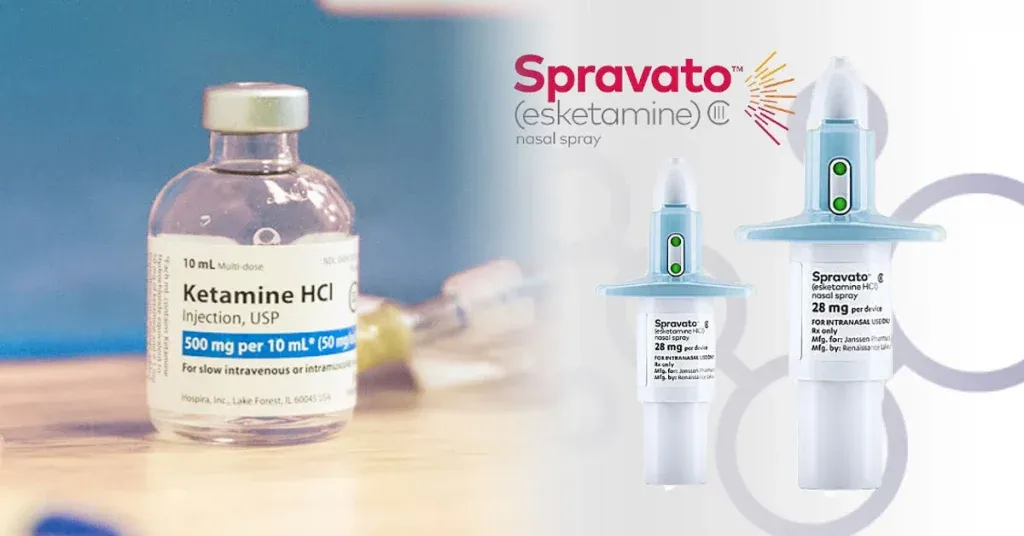
We offer three primary delivery formats for ketamine therapy. Each fits a different patient profile, and we choose the right format based on your symptoms, your insurance situation, and your response history. The full clinical detail is on our main ketamine service page. The short version is below.
The format with the longest clinical track record. A low dose is delivered intravenously over 40 to 60 minutes, with continuous monitoring of heart rate and blood pressure throughout. IV is generally the right starting point for severe or treatment-resistant depression.
FDA-approved for treatment-resistant depression and often covered by major insurers including United Healthcare and major Blue Cross Blue Shield plans. Sessions take place in our office under medical supervision, with a two-hour observation period after dosing. For many patients with insurance, Spravato is the most accessible option. More on our Spravato page.
A shorter, more cost-effective format that pairs well with structured psychotherapy. The injection takes minutes rather than an hour, and the therapeutic effect can still last for days or weeks. We often combine IM with our ketamine-assisted therapy program for patients who want the benefits of ketamine alongside ongoing therapeutic work.
If you have never been to the clinic, the first visit is structured to make the experience predictable. Here is how it tends to go:
You arrive at 80 5th Avenue and take the elevator to Office 1405. The waiting area is quiet and private. You will not see a busy medical lobby or crowded patient list. Your first appointment is a consultation with one of our psychiatrists, usually Dr. Fradkin or Dr. Bruck, where we review your full medical history, current medications, prior treatment, and goals for ketamine therapy. We do not book first infusions on the same day as the consultation. Pre-treatment screening is non-negotiable, and the gap between consultation and first infusion gives you time to think and ask follow-up questions.
On the day of your first session, you arrive 15 minutes before your scheduled time. You are settled into a private treatment room. For IV sessions, an IV line is placed and the infusion begins at a low, carefully titrated dose. For Spravato, you self-administer the nasal spray under supervision. For IM, the injection is given by a clinician. Your vital signs are monitored throughout, and a clinician is present and available the entire time.
The session itself usually lasts 40 to 60 minutes for IV, less for IM, and includes a two-hour monitored observation period for Spravato. After the session, you rest in our recovery space until you feel steady. You will need someone to take you home, either a friend, family member, or rideshare. You should not drive or make significant decisions for the rest of the day.
Ketamine therapy at Village TMS is used for the conditions where the clinical evidence is strongest and where a thorough psychiatric evaluation supports treatment. We treat:
If you are not sure whether ketamine is right for you, the only honest way to find out is a proper consultation. We review every patient’s full history before recommending any course of treatment. You can read more on our page for treatment-resistant depression.
Pricing of ketamine therapy in Manhattan tends to run higher than the national average, reflecting the cost of operating a properly staffed clinic in the city. At Village TMS, IV ketamine sits in the $400 to $800 per session range. Spravato, when covered by insurance, can cost a fraction of that out-of-pocket. We verify your specific benefits before your first session and walk through the complete expected cost during your free consultation by the administrator. The full breakdown, including what to ask any clinic about hidden fees, is in our ketamine therapy cost guide.
We accept several major insurance plans for Spravato, including Aetna, Anthem, Cigna, Optum, and Tricare, as well as Medicare. While we are currently in-network with Medicare, our participation in specific Medicaid managed care plans like Healthfirst is currently limited or under re-evaluation. We verify your specific benefits and billing pathway – whether through medical or pharmacy benefits – before your first session. IV and IM ketamine are typically self-pay, though some patients receive partial reimbursement through out-of-network benefits. Read more on our insurance page.
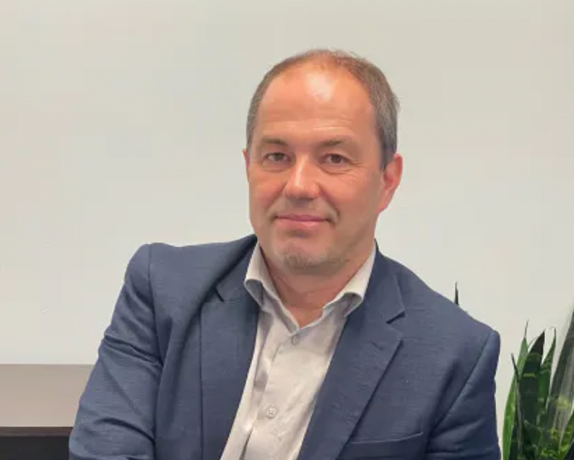
Dr. Fradkin has been practicing psychiatry for more than 25 years. He has held positions at Mount Sinai Beth Israel Hospital in New York, Tufts Medical Center in Boston, and Yale Medical School in Connecticut, and currently serves as an assistant professor at Rutgers University, where he teaches the next generation of psychiatrists. He also practices at Health and Wellness Center in Montclair, New Jersey, which extends his reach for patients in the wider region.
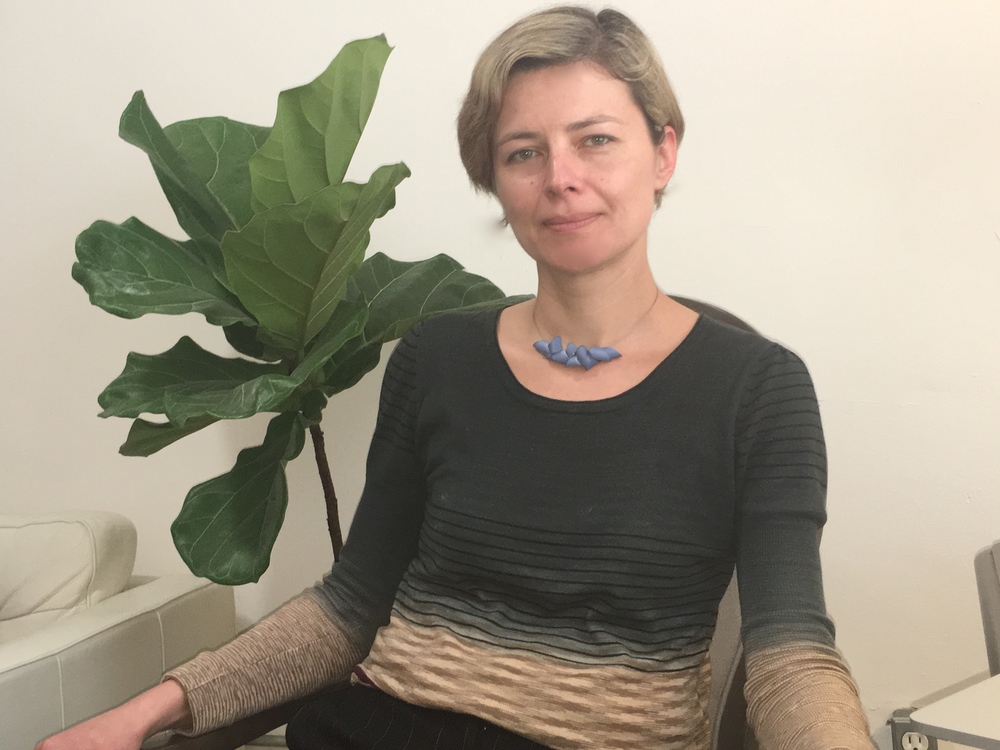
Dr. Bruck has been practicing psychiatry for nearly twenty years, first in Vienna, Austria, where she completed her medical training, and then in New York. She holds fellowships in geriatric psychiatry and from the New York Psychoanalytic Institute, with published research in psychotherapy, dementia, and Seasonal Affective Disorder. Dr. Bruck offers care in English, Russian, and German, which makes the clinic an option for patients who prefer to receive psychiatric treatment in a language other than English.
Most patients we see have other ketamine clinics closer to home. The reasons they travel to Manhattan are usually some combination of three things.
The first is psychiatric supervision. Patients who have already tried ketamine elsewhere, or who have done their research before booking, often specifically want a psychiatrist in the room rather than a technician or rotating nurse. Manhattan has more board-certified psychiatric ketamine providers per square mile than anywhere else in the metro area, and that concentration is itself a reason to travel.
The second is format flexibility. Single-format clinics push every patient through the option they offer. Patients with complex insurance situations, or who have not responded well to one format and want to try another, often travel to a clinic that offers IV, IM, and Spravato in one place.
The third is integration support. Many patients who have tried ketamine without integration therapy find the effects do not last as long as they hoped. The window of neuroplasticity after a session is real, and what happens in that window matters. Clinics that build integration into the program rather than treating ketamine as a stand-alone procedure often produce better long-term outcomes.
If you are considering ketamine therapy and want to talk through whether our Manhattan clinic is the right fit, the first step is a free consultation. We review your history, your goals, and the format options that make sense for your situation. There is no commitment, and we are happy to be one of the clinics you are evaluating.
Call 646-817-2835 to book a consultation, or contact us here.


Take this next step, we’ll help with the others.
80 5th Avenue, Office 1405, on the corner of 5th Avenue and 14th Street. The building is in the Flatiron district, between Union Square to the east and Greenwich Village to the west. The clinic is on the 14th floor.
Yes, regularly. Patients travel to the Manhattan clinic from across the metro area. Brooklyn (Brooklyn Heights, Williamsburg, Park Slope), Queens (Long Island City, Astoria, Forest Hills), and New Jersey (Hoboken, Jersey City, Weehawken, and the surrounding NJ communities) are all common origin points. Most patients reach the clinic in 30 to 45 minutes by subway or PATH.
Village TMS operates from the single Manhattan clinic at 80 5th Avenue. Dr. Fradkin also practices separately at Health and Wellness Center in Montclair, New Jersey, but ketamine therapy through Village TMS is delivered at the Manhattan office.
No. We deliver ketamine therapy in person at the Manhattan clinic with continuous monitoring, full pre-treatment screening, and integration support. For most patients, in-clinic care produces better outcomes and is the safer model. We are happy to discuss whether telehealth ketamine might be appropriate for your situation during a consultation, even if we are not the right clinic to provide it.
From most of Manhattan, the clinic is a short walk or subway ride. If you are coming from Brooklyn, the L train from Williamsburg or the 4, 5, N, R, and W lines from Brooklyn Heights and Park Slope all connect directly to Union Square. From Queens, the N, W, and R trains from Astoria and Long Island City provide the most direct access to 14th Street. From Hoboken or Jersey City, the PATH to 14th Street is the most straightforward route. If you are traveling from further out, our front desk can help map out the best transit or driving options when you schedule your visit
Street parking near 80 5th Avenue is limited but possible, particularly outside peak hours. Several commercial parking garages are within two blocks, including options on 13th Street and 12th Street. Most patients find rideshare or transit easier than driving for the day of a ketamine session, since you cannot drive yourself home afterward.
We use cookies to improve your experience on our site. By using our site, you consent to cookies.
Manage your cookie preferences below:
Essential cookies enable basic functions and are necessary for the proper function of the website.
These cookies are needed for adding comments on this website.
Google reCAPTCHA helps protect websites from spam and abuse by verifying user interactions through challenges.
Google Tag Manager simplifies the management of marketing tags on your website without code changes.
You can find more information in our Cookie Policy and Privacy Policy.