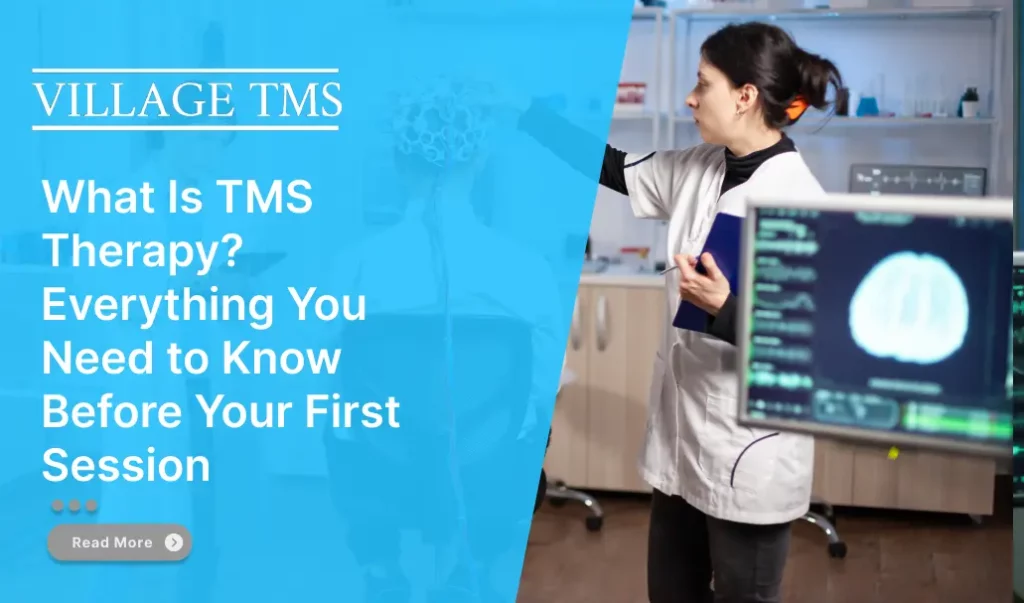
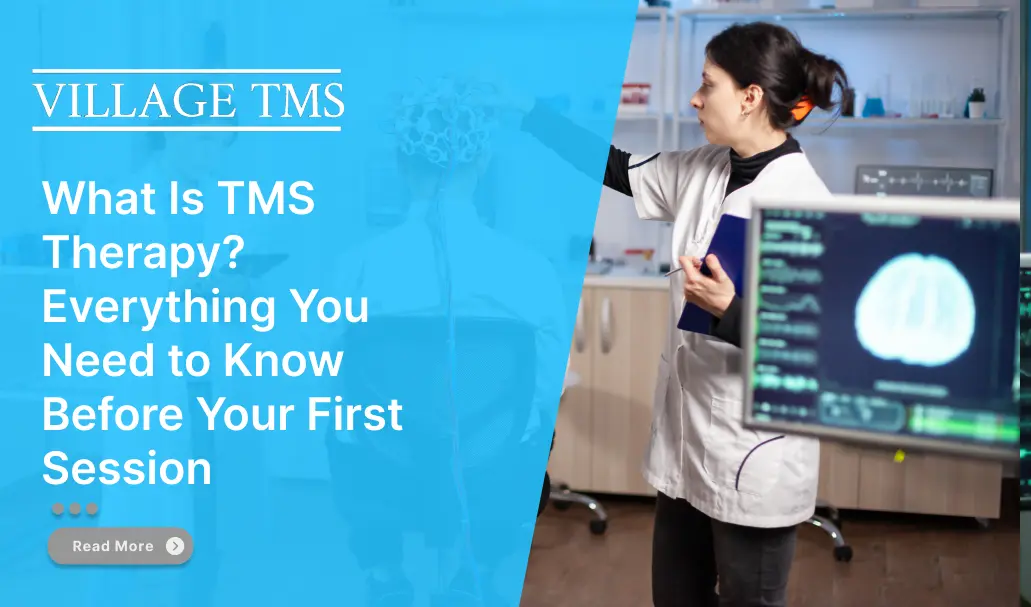
What Is TMS Therapy? Everything You Need to Know Before Your First Session

What Is TMS Therapy

If you have been living with depression that has not responded to medication, you may have come across the term TMS therapy and wondered whether it could help you. What is TMS therapy, exactly? And is it right for you? This guide walks you through everything you need to know, from how it works and what to expect during a session, to who it is best suited for and what results patients typically experience. At Village TMS in New York, we believe that informed patients make better decisions, and we want you to feel confident before you ever walk through our door.

What Is TMS Therapy?

TMS stands for transcranial magnetic stimulation. TMS therapy is a non-invasive, FDA-cleared treatment for major depressive disorder that uses targeted magnetic pulses to stimulate specific areas of the brain associated with mood regulation. It does not require anaesthesia, involves no surgery, and does not rely on medication. Patients remain fully awake and alert throughout each session.

The magnetic pulses used in TMS therapy are similar in strength to those used in an MRI machine. They are directed at the prefrontal cortex, an area of the brain that tends to show reduced activity in people with depression. By stimulating this region, TMS therapy helps to reactivate neural pathways and restore more balanced brain function over time.

TMS Therapy NYC

What Happens During a TMS Therapy Session?

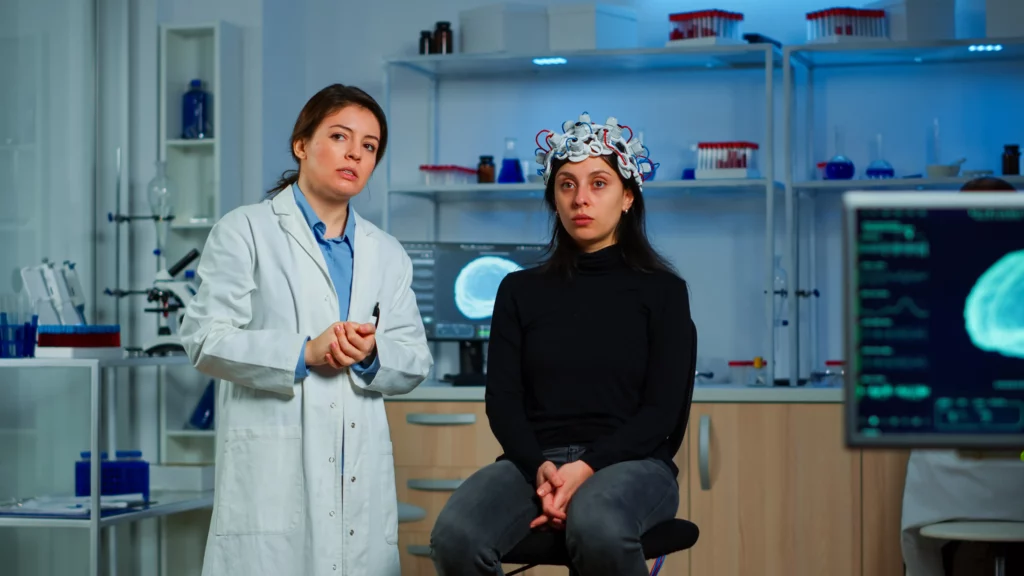
A typical TMS therapy session at Village TMS lasts between 20 and 40 minutes. Here is what you can expect:

  • You will sit in a comfortable, reclined chair in a quiet treatment room
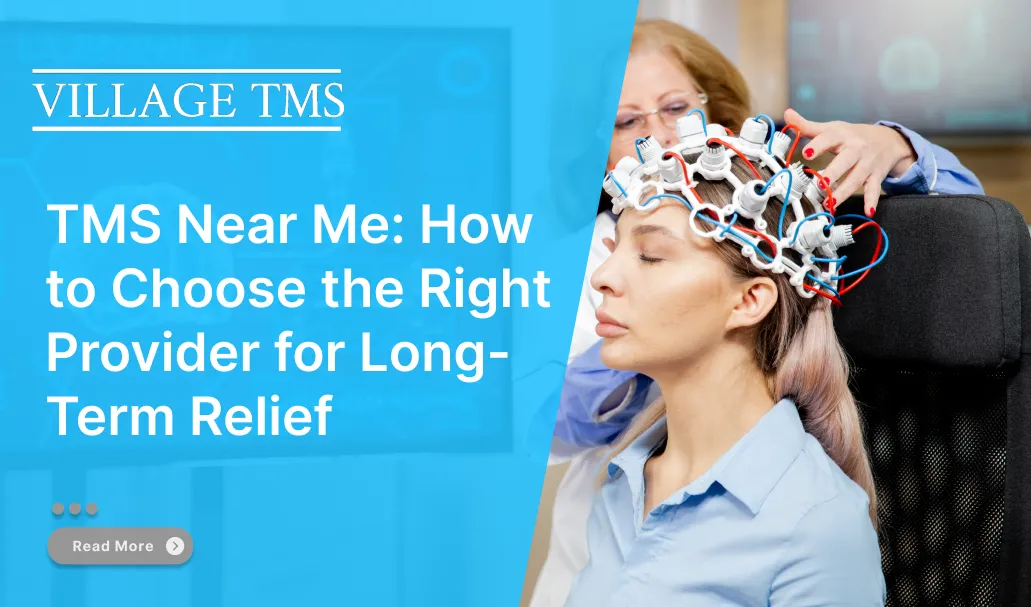
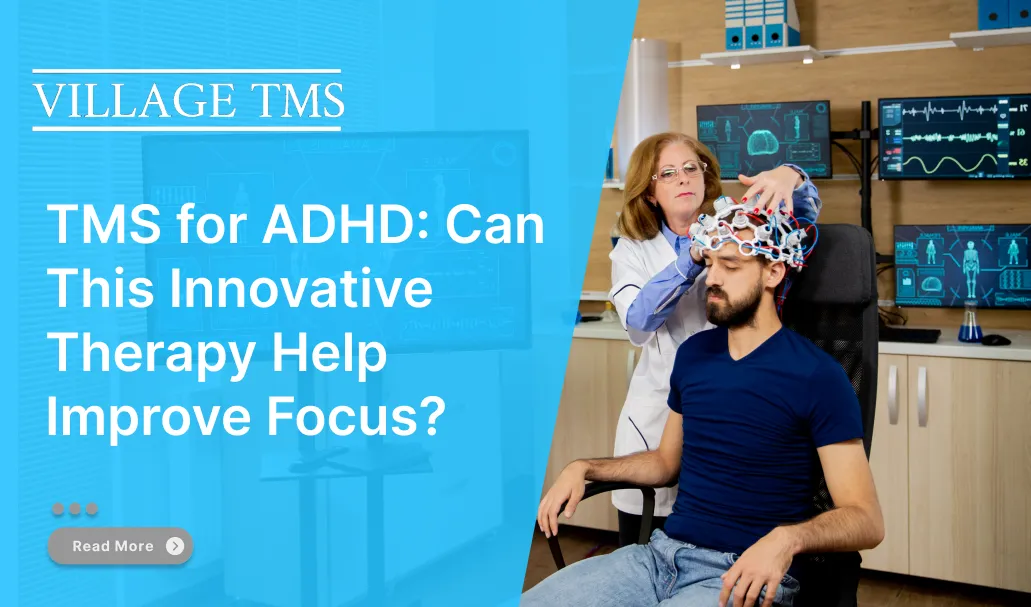
  • A small magnetic coil is positioned gently against your scalp, near the area of the brain being targeted
  • You will hear a clicking sound and feel a light tapping sensation on your scalp as the pulses are delivered
  • You remain fully awake throughout and can listen to music or simply relax
  • When the session ends, you can leave immediately and go about your day


Most TMS therapy courses consist of five sessions per week over four to six weeks, totalling around 20 to 30 sessions. Your treatment plan at Village TMS will be tailored to your specific situation and monitored throughout.

Who Is TMS Therapy Best Suited For?

TMS therapy is most commonly recommended for people who:

  • Have been diagnosed with major depressive disorder
  • Have tried one or more antidepressant medications without sufficient improvement
  • Cannot tolerate the side effects of antidepressant medication
  • Are looking for a non-medication-based treatment option
  • Want to continue working and living normally during treatment


TMS therapy may not be suitable for everyone. People with metal implants in or near the head, certain medical devices, or a history of seizures may not be candidates. A thorough consultation at Village TMS will determine whether TMS therapy is appropriate for you.

Ketamine for Bipolar NYC

What Results Can Patients Expect?

Results from TMS therapy vary from person to person, but clinical studies consistently show meaningful improvement for a significant proportion of patients. Many people begin to notice positive changes in mood, sleep, energy, and concentration within the first two to three weeks of treatment. Some patients achieve full remission from depression symptoms.

It is important to approach TMS therapy with realistic expectations. It is not an instant fix, and the full benefits often continue to develop in the weeks following completion of the treatment course. The team at Village TMS will track your progress closely and discuss outcomes openly with you throughout.

Is TMS Therapy Covered by Insurance?

Many major insurance providers now cover TMS therapy for treatment-resistant depression, particularly when patients have documented evidence of prior medication trials. Village TMS works with patients to navigate the insurance process and will help you understand your coverage before treatment begins.

Take the Next Step

If you have been wondering what TMS therapy could do for you, the best place to start is a conversation. Our team at Village TMS in New York is here to answer your questions, walk you through the process, and help you decide whether TMS therapy is the right fit for your situation.

Contact Village TMS today to speak with our team or book your initial consultation.

Call us now to get your FREE consultaion

Take this next step, we’ll help with the others.

Explore More Blog Posts

Frequently Asked Questions

We've Got Answers

What is TMS therapy used for beyond depression?

While TMS therapy is FDA-cleared specifically for major depressive disorder and obsessive-compulsive disorder, ongoing research is exploring its use in anxiety, PTSD, and other conditions. At Village TMS, our primary focus is depression and treatment-resistant cases.

Is TMS therapy painful?

Most patients describe TMS therapy as mildly uncomfortable rather than painful, particularly in the first few sessions. The tapping sensation on the scalp tends to become more tolerable as treatment progresses. Headaches can occasionally occur after early sessions but typically resolve quickly.

How long do the effects of TMS therapy last?

For many patients, the benefits of TMS therapy are long-lasting. Some patients maintain improvement for a year or more after completing treatment. If symptoms return, a maintenance or repeat course of TMS therapy may be recommended.

Can I have TMS therapy alongside medication or talk therapy?

Yes. TMS therapy is often used alongside existing treatments rather than as a replacement. Many patients continue with their current medication or therapy programme while undergoing TMS. Your provider at Village TMS will review your full treatment picture during the initial consultation.

What is TMS therapy like compared to what I have imagined?

Many patients are pleasantly surprised. The procedure is quieter, gentler, and more straightforward than most people expect. There is no recovery time, no sedation, and no hospital stay. Most patients read, listen to music, or simply rest during sessions.