Medically reviewed by Yuli Fradkin, MD, board-certified psychiatrist | Last reviewed January 2027
For months, maybe years, the medication worked. You slept better, the fog lifted and ordinary days felt manageable again. Then, slowly or all at once, the old heaviness came back, even though you never missed a dose. It is a frightening experience, and a common one. The good news is that a medication losing its effect has explanations, many of them fixable, and when they are not, there are effective next steps.
This guide explains why antidepressants stop working, including the phenomenon often called poop-out, the other reasons that are easy to miss, what your psychiatrist should check first, when the picture counts as treatment-resistant depression and what the next options are. One rule applies throughout: do not stop or change your medication on your own. Talk to your prescriber first.
What We Know
|
Is it really ‘poop-out’ (tachyphylaxis)?
Sometimes. Antidepressant tachyphylaxis, nicknamed poop-out, means a medication that once relieved depression gradually stops working even though you are still taking it as prescribed. A review by Kinrys and colleagues in the Journal of Affective Disorders reported that rates varied from 9 to 57 percent depending on the patient population and the length of follow-up.
Why it happens is not fully understood. An earlier review by Byrne and Rothschild in the Journal of Clinical Psychiatry listed several possible explanations: the loss of an early placebo effect, pharmacological tolerance as the brain adapts to the medication, an increase in the severity of the illness, a change in the course of the disorder, unrecognized rapid cycling in someone with an underlying bipolar disorder, and loss of the medication’s protective effect over time.
So when people ask why antidepressants stop working, the honest answer is that antidepressant tolerance is one possibility among several. That is why the next step is a careful review rather than an assumption.
Other reasons an antidepressant can stop working
Before concluding that a medication has failed, it helps to look at everything that can make it seem that way. Several common reasons are easy to fix once they are spotted:
- Dose. Many people stay on a starting dose that was never raised to the full therapeutic range, or a dose that suited them at one time no longer does.
- Missed or irregular doses. Skipped doses, running out between refills or taking medication at very different times can reduce its effect.
- New medications or substances. Some drugs interact with antidepressants, and alcohol and cannabis can worsen mood and sleep.
- Medical conditions. Thyroid problems, sleep apnea, chronic pain, hormonal changes and other illnesses can bring depressive symptoms back.
- Life events. Grief, job loss, a breakup, caregiving or chronic stress can overwhelm a treatment that was enough under calmer conditions.
- Seasonal patterns. Some people’s depression worsens at the same time each year.
Relapse can also happen during treatment that is still partly working. In NIMH’s STAR*D study, published in the American Journal of Psychiatry, relapse during follow-up was more common among people who needed more treatment steps to reach remission: 33.5 percent after the first step, rising to between 42.9 and 50 percent after the later steps.
Could it be a different diagnosis?
Sometimes a medication seems to stop working because the original diagnosis was incomplete. Two possibilities come up often.
Bipolar disorder can present as depression for years before a manic or hypomanic episode is recognized. Antidepressants alone can be less effective in bipolar depression, and periods of irritability, reduced need for sleep or racing thoughts may be clues. Our page on bipolar disorder treatment in NYC explains how treatment differs, and our article on TMS for bipolar depression covers the evidence for that option.
Persistent depressive disorder, previously called dysthymia, is a chronic form of depression. According to MedlinePlus, from the National Library of Medicine, it involves a low, dark or sad mood on most days for at least two years in adults. Because the symptoms are long-standing and sometimes milder than a major depressive episode, people often assume the low mood is simply their personality, and a medication that relieved a major episode may leave this underlying pattern in place. NIMH estimates that about 1.5 percent of US adults had persistent depressive disorder in the past year.
Persistent depressive disorder treatment: what helps
Persistent depressive disorder treatment usually combines several approaches rather than relying on medication alone. MedlinePlus notes that antidepressant medicines are often effective, and that talk therapies such as cognitive behavioral therapy can help people understand and change the thought patterns that keep low mood going.
- A full psychiatric evaluation to confirm the diagnosis and check for overlapping conditions, such as anxiety or a major depressive episode on top of the chronic low mood
- Medication at an adequate dose for an adequate length of time, reviewed with your prescriber
- Psychotherapy, which is especially useful for long-standing patterns
- Attention to sleep, exercise, alcohol and social connection, which all affect mood
- Interventional treatments, such as TMS, Spravato or ketamine, when depression has not responded to several adequate medication trials. Insurance criteria for TMS and Spravato are written for major depressive disorder, and several plans require a severe major depression diagnosis, so persistent depressive disorder on its own usually does not qualify for coverage
What your psychiatrist checks first
When an antidepressant seems to have stopped working, a good psychiatric review usually covers the same ground before any change is made:
- Your full medication history: every antidepressant, the dose, how long you took it, how well it worked and why it was stopped
- How you are actually taking the medication now, including missed doses and timing
- Other medications, supplements, alcohol and substance use
- Medical causes, which may mean blood tests such as thyroid function
- Sleep, stress and recent life events
- Signs of bipolar disorder, persistent depressive disorder, anxiety, PTSD or another condition
- A baseline score on a validated depression scale, so changes can be measured
Do not stop an antidepressant abruptly while this is happening. NIMH advises that people should not stop a prescribed medication without talking to their health care provider, and that stopping too soon can cause unpleasant or harmful effects. Antidepressants also usually take 4 to 8 weeks to work, so any change your prescriber makes needs time to show its effect.
When does it count as treatment-resistant depression?
Depression is generally considered treatment-resistant when it has not responded adequately to at least two antidepressants, each taken at an adequate dose for an adequate length of time. An international consensus published in World Psychiatry in 2023 defined it as an inadequate response to a minimum of two antidepressants despite adequate treatment and adherence, and estimated that at least 30 percent of people with depression meet that definition.
The label matters because it changes the plan. STAR*D showed that each additional medication step helps fewer people, and treatment-resistant depression opens the door to treatments that work differently. Our page on treatment-resistant depression treatment explains how we make the diagnosis and what we offer.
Next options: TMS, Spravato, ketamine and augmentation
When two or more medications have not worked, there are several evidence-based paths. Which one fits depends on your history, safety screening, schedule and coverage.
| Option | What it involves | Regulatory status |
|---|---|---|
| Augmentation | Adding a second medication, such as certain atypical antipsychotics, lithium or another antidepressant | Several atypical antipsychotics are FDA-approved as add-on treatments for major depression |
| TMS | Magnetic stimulation of a mood-regulating brain region, typically 30 to 36 sessions over 6 to 9 weeks | FDA-cleared device |
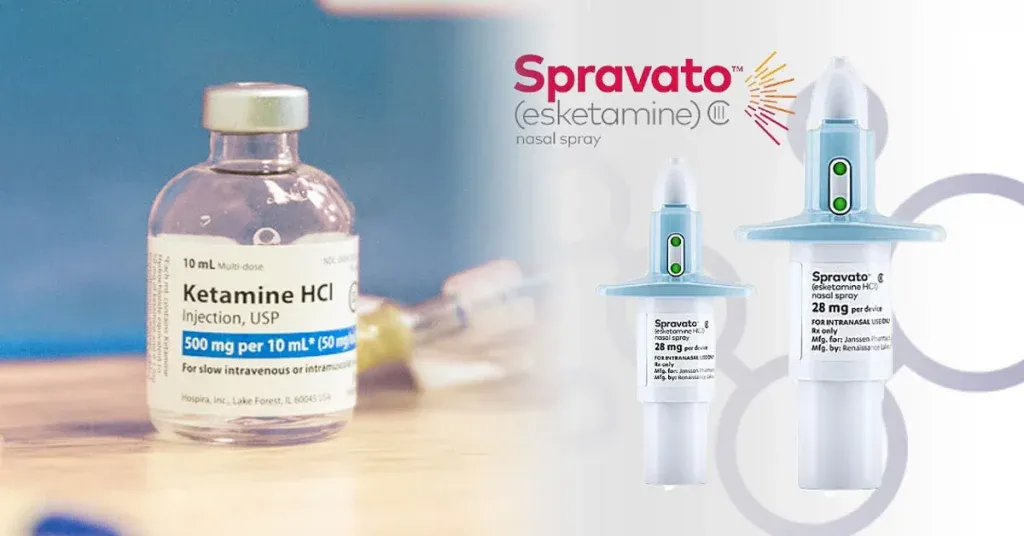
| Spravato | Esketamine nasal spray in a certified clinic, with at least 2 hours of monitoring | FDA-approved drug |
| IV or IM ketamine | Monitored in-clinic sessions | Off-label for depression |
| Psychotherapy | Structured therapy such as CBT, alone or alongside other treatments | Evidence-based |
TMS uses magnetic pulses rather than medication, so it avoids the whole-body side effects many people experienced with antidepressants. Our TMS therapy page explains a course in detail. Spravato acts on the glutamate system and can work within days, and our page on Spravato treatment in NYC covers what it involves. For a side-by-side view, see our comparison of TMS vs Spravato vs ketamine.
Staying on treatment that works also matters. In a meta-analysis of 31 trials published in The Lancet, 18 percent of people who continued their antidepressant relapsed, compared with 41 percent of those switched to placebo, which is one more reason never to stop a medication without your prescriber.
How to start
If your antidepressant seems to have stopped working, the first step is a conversation with your prescriber, not a change on your own. Bring a list of every medication you have tried, with doses and dates, and a note of when symptoms started returning and anything that changed around that time. Insurers look at exactly these details. For TMS, for example, the minimum time on each medication is four weeks at Cigna, six weeks at TRICARE and eight weeks at Aetna, and Aetna also asks for an add-on (augmentation) trial.
If you have already tried two or more medications without lasting relief, a specialist evaluation can look at the full picture and discuss whether TMS, Spravato, ketamine or another approach makes sense. Our page on how we choose a treatment explains how that evaluation works. If you are having thoughts of suicide, call or text 988 or call 911.
Call 646-817-2835 or contact us to book a free consultation.