
Deep TMS is FDA-cleared to reduce anxiety symptoms in adults with major depression, often called anxious depression. For generalized anxiety disorder on its own, TMS is off-label. Our psychiatrists help you work out which applies to you.
Or call (646) 817-2835 — speak with our team now
Medically reviewed by Yuli Fradkin, MD, board-certified psychiatrist · Last reviewed October 2026
Rated 5.0
On Google reviews
FDA-Cleared
For anxious depression
In-Network
Aetna, BCBS, Cigna, United
Board-Certified
Psychiatrists, 25+ years
WHAT IS CLEARED
Anxiety shows up in a TMS clinic in two different ways, and the difference decides whether TMS is an FDA-cleared treatment for you. Anxious depression is major depression with strong anxiety: constant worry, tension, restlessness and trouble relaxing. In 2021 the FDA cleared BrainsWay Deep TMS to reduce anxiety symptoms in adults with major depressive disorder. TMS devices are regulated by the FDA as medical devices, so the correct term is cleared, not approved.
Anxiety disorders such as generalized anxiety disorder (GAD), panic disorder and social anxiety disorder are separate diagnoses. TMS is not FDA-cleared for any of them, so using it for GAD alone is off-label. The first-line treatments are cognitive behavioral therapy and medications such as SSRIs and SNRIs (see NIMH on anxiety disorders).
FDA-cleared: major depression (2008); anxiety symptoms in adults with depression, using Deep TMS (2021). Off-label: generalized anxiety disorder, panic disorder, social anxiety disorder and PTSD.
No
Anesthesia
No
Systemic Side-Effects
20-30
Min per session
Drive
Yourself home
THE EVIDENCE
The evidence is stronger for anxiety that comes with depression than for anxiety disorders alone.
FDA-CLEARED
The 2021 clearance covers Deep TMS for reducing anxiety symptoms in adults being treated for major depression. Many patients treated with standard TMS for depression also report less anxiety as their mood improves.
OFF-LABEL
Several small sham-controlled trials of rTMS for GAD, most using low-frequency stimulation over the right prefrontal cortex, have reported larger drops in worry and anxiety scores than sham. Reviews call the results promising but note small samples and varied protocols.
LIMITED DATA
Research on TMS for panic disorder and social anxiety disorder is limited to a handful of small studies. We do not recommend TMS as a treatment for these conditions on their own.
SIDE-BY-SIDE COMPARISON
Therapy and medication come first for anxiety disorders. This table shows where TMS fits.
WHO IT MAY SUIT
Adults with major depression and strong anxiety whose symptoms have not improved enough with antidepressants. TMS is FDA-cleared for the depression, and Deep TMS is also cleared for the anxiety symptoms that come with it.
Adults with generalized anxiety disorder who have tried CBT and medication without enough relief, and who accept an off-label treatment.
People who stopped SSRIs or SNRIs because of side effects and want an option that does not circulate through the body.
Anyone with a history of seizures or metal implants near the head, and anyone whose anxiety has not yet been treated with therapy or medication.
Free insurance verification. Know your cost before your first session.
YOUR FIRST STEPS
15-MIN FREE
We listen to what is going on, answer your questions about TMS and check your insurance. No cost and no obligation.
1 VISIT
A board-certified psychiatrist reviews your anxiety and mood, past medications and therapy, sleep, caffeine and alcohol use, and medical history. We work out whether you have anxious depression, an anxiety disorder or both.
SHARED DECISION
We explain what is FDA-cleared, what is off-label and what each option is likely to do for you. Sometimes the best next step is a medication change or CBT rather than TMS.
IF TMS FITS
If we agree TMS makes sense, we measure depression and anxiety scores with standard questionnaires during the course and review them with you at set points.
Not sure where to start? Talk it through with our team.
WHAT TO EXPECT
If you and your psychiatrist decide on TMS, this is what the course involves.
At the first visit we measure your motor threshold, the lowest magnetic strength that makes your thumb twitch slightly. We use it to set the dose for your treatments and to locate the treatment target.
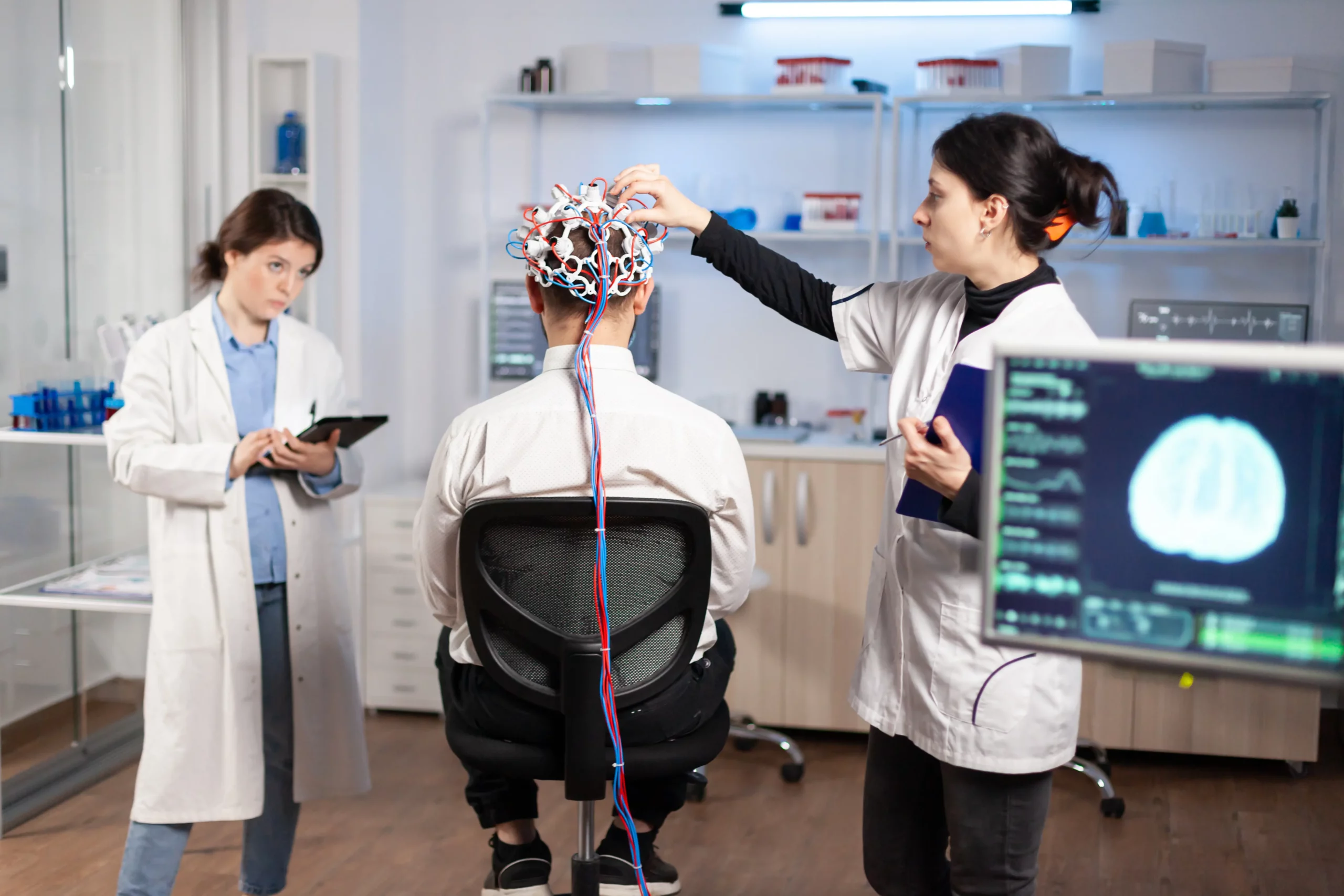
You sit in a reclining chair while the coil rests against your head. You will feel a tapping sensation and hear clicks, so we give you earplugs. Sessions take about 20–30 minutes depending on the protocol. You stay awake, need no anesthesia and can drive yourself home. If the noise or sensation makes you anxious at first, tell us and we will pause and explain each step.
A standard course is usually 30–36 sessions over 6–9 weeks, five days a week. Your psychiatrist sets your schedule. Most patients treated for depression notice improvement within 3–5 weeks. We check anxiety and depression scores at set points so we can tell whether the course is working.
At the end of the course your psychiatrist reviews your scores with you and discusses next steps, which may include maintenance sessions. Therapy and any medication you take usually continue, because TMS works best as part of a wider plan.
Have questions about TMS for anxiety?
SAFETY & TRANSPARENCY
Some people feel more on edge during the first few sessions, mostly because of the tapping sensation and the clicking sound. This usually settles as the sessions become familiar. A few patients notice a temporary rise in anxiety or trouble sleeping. Tell us if it happens, because we can adjust the settings or schedule.
The most common side effects are scalp discomfort and headache, usually in the first week or two. Seizures are rare. TMS needs no anesthesia and has not been linked to memory problems. See our guides to TMS side effects and TMS success rates.
Evidence first: We tell you which uses are FDA-cleared and which are off-label before you decide anything.
Whole-person assessment: We look at mood, anxiety, sleep, substance use and physical causes of anxiety together, so nothing important is missed.
Clear review points: If your scores are not improving when we review them, we say so and talk through other options.
TMS does not circulate through your body, so it does not cause the weight, appetite or sexual side effects some medications can.
Unlike ECT, TMS needs no anesthesia and has not been linked to memory loss in clinical studies.
Seizures are rare. Pre-treatment screening identifies anyone for whom TMS is not appropriate.
TMS is not appropriate for people with certain metal implants in or near the head. We confirm you are a safe candidate before treatment begins.
Insurers cover TMS for major depression, including depression with anxiety, when medical-necessity criteria are met, usually after several antidepressant trials. TMS for generalized anxiety disorder alone is off-label and usually not covered. We verify your benefits for free and handle prior authorization. Read more: Is TMS covered by insurance? and the cost of TMS therapy.
AETNA
BCBS
CIGNA
UNITED
EMPIRE BCBS
OXFORD
MEDICARE
+ MORE CARRIERS
Takes 2 minutes. No commitment.
Board-certified psychiatrists with decades of experience treating depression, OCD,
and anxiety.

Board-Certified Psychiatrist · 25+
Years Experience
I founded Village TMS because so many of my patients had been failed by
standard treatment paths. My approach is unhurried, evidence-driven, and centred on what each person actually needs to feel like themselves again.

Board-Certified Psychiatrist · 15+ Years Experience
I came to TMS after watching patients
cycle through medications that didn't fit them. My focus is precision, matching the right protocol to the right person, and adjusting as we go.

Psychotherapist & Coach ·
Couples Therapy
I help adults and couples build self-awareness and deepen relationships. My work is grounded in Gestalt therapy and informed by EMDR, mindfulness, and transpersonal psychology. I combine deep emotional exploration with practical tools, working in a warm, collaborative space where clients feel genuinely seen and supported.
Everything you need to know before your free consultation.
Still have questions? We're here to help.
Or call (646) 817-2835
INSIGHTS
· 5 min read
· 5 min read
· 5 min read

· 5 min read
· 5 min read
· 5 min read
EXPLORE OUR SERVICES
VISIT US
We are at 80 Fifth Avenue, Suite 1405, at 14th Street between Union Square and the Flatiron District. Patients come from across Manhattan, Brooklyn, Queens and New Jersey. See how to get here.
Greenwich Village ·
Chelsea · West Village ·
East Village · SoHo ·
Tribeca · Flatiron ·
Midtown
Williamsburg · Brooklyn
Heights · Park Slope ·
Long Island City · Astoria
· Forest Hills
Hoboken · Jersey City ·
Weehawken · Edgewater
· Fort Lee